What Actually Transfers When You Buy a Rooftop?
Heritage Automotive just added Audi Swindon and Volkswagen Swindon to its portfolio, acquiring both from Group 1 Automotive UK. The deal makes sense on paper: Heritage is already the number one Volkswagen retailer group in the UK, the South West footprint deepens, and two Swindon communities get an operator with three decades of franchise experience behind it. The physical transaction is clean. The staff transfers. The inventory transfers. The facility keys transfer.
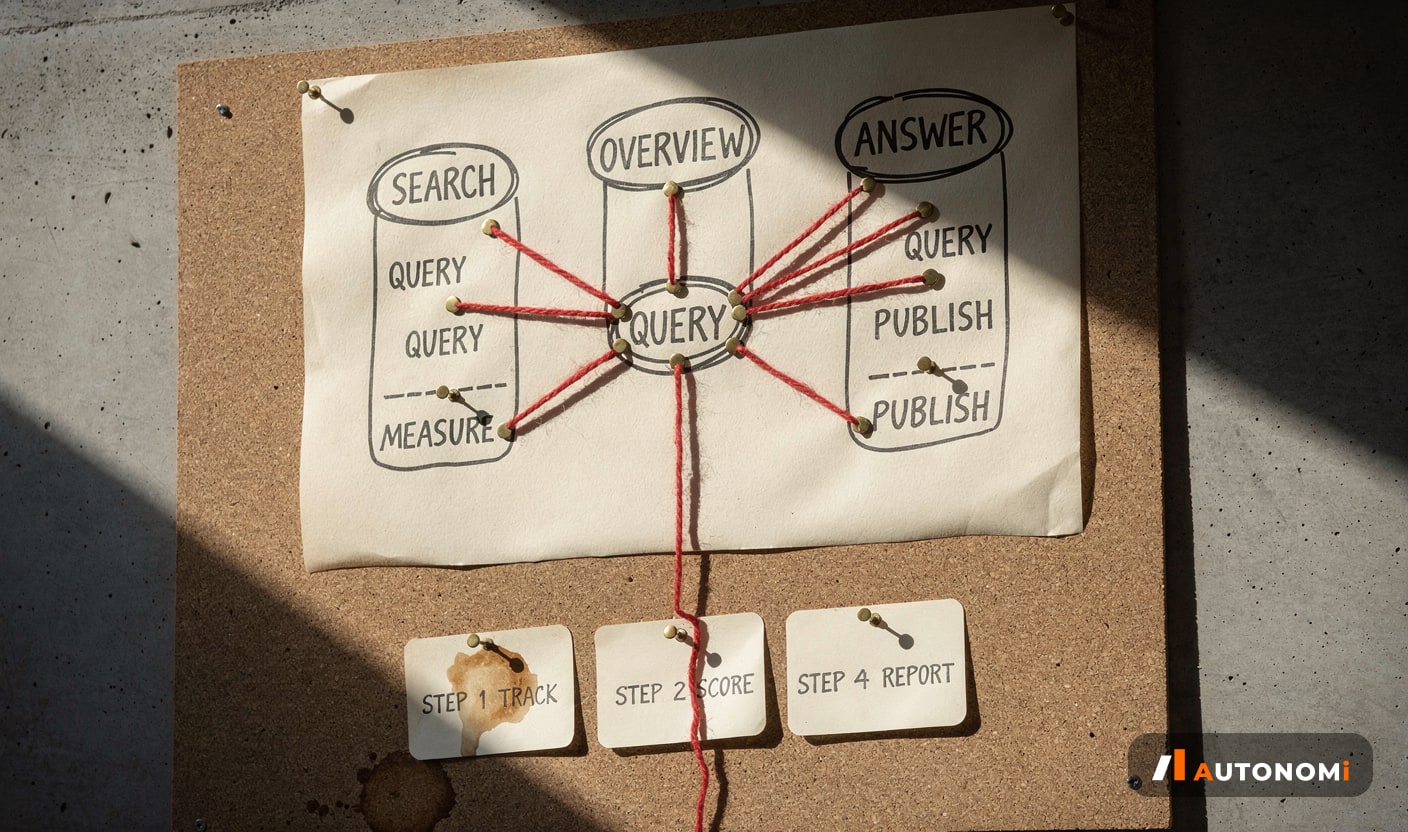
What the press release does not mention, because nobody in automotive M&A ever does, is the advertising infrastructure. The ad accounts stay with whoever built them. The audiences built inside those accounts, audience lists assembled from months of website traffic and past converters, reset or disappear. The campaign history that trained Google's Smart Bidding signals evaporates. Heritage starts those two rooftops from cold on paid acquisition, and the cost of that cold start never appeared in the deal valuation.
This is not a Heritage-specific problem. It is a structural problem in how dealer M&A treats digital infrastructure, and it happens every time a rooftop changes hands.
Why Do Ad Accounts Stay With the Agency When the Dealer Leaves?
In the traditional agency model, ad accounts are created under the agency's own Google or Meta Business Manager, not the dealer's. The agency builds the account structure, funds the campaigns, and manages access. When the dealer parts ways with the agency, or when a rooftop changes hands, the agency retains ownership of the account. The dealer leaves with nothing but a campaign history they can no longer access and an audience list they can no longer retarget.

This arrangement made a kind of sense in 2010, when managing a Google Ads account required specialized expertise and the agency was genuinely providing a service that justified the administrative overhead. It makes much less sense now, and in an M&A context it becomes an active liability.
Consider what Heritage Automotive lost the moment it acquired those two rooftops. Not just the audiences. The bidding models attached to the prior campaigns had been calibrating against local search intent for months or years. Smart Bidding on Google Search and Performance Max learns from conversion signals tied to the account: which queries convert, which device-time-of-day combinations work, which audience overlaps lift performance. That learning lives in the account history. When the account is gone, the learning is gone. The new campaign starts blind.
The same dynamic applies to Meta. Custom audiences built in Meta's Business Manager, including website visitors, past engagers, and lookalike seeds, are tied to the pixel and ad account that collected them. They do not transfer via contract. They cannot be exported and re-imported. When the acquiring group spins up a new account, it starts building those audiences from zero, and the retargeting window it lost may represent the most valuable segment in the prior operation's funnel.
What Does the Cold-Start Tax Actually Cost?
There is no line item in a dealership acquisition that reads "Smart Bidding relearning period: £X." There should be. The performance gap between a mature, well-optimized campaign account and a brand-new account in the same market is real and measurable, even if the industry has not developed a standard way to price it into deals.

A new account entering a competitive Google Search auction for automotive terms in a mid-size UK market is bidding without signals. It will overpay for clicks that a mature account would have learned to avoid. It will miss conversion windows that a mature account's audience segmentation would have caught. It will take weeks, sometimes longer, before Smart Bidding accumulates enough conversion data to exit the exploration phase and start optimizing toward actual cost-per-lead targets.
During that period, the rooftop is still paying for advertising. It is paying at a worse rate than it was the day before the acquisition closed. The operational continuity that made the deal attractive, keeping the staff, keeping the inventory pipeline, keeping the customer relationships, does not extend to the one channel that drives the top of the acquisition funnel every single day.
Most acquiring groups absorb this cost as a normal part of the transition, because they have no alternative. The infrastructure was never theirs to take. The deeper problem is structural: digital marketing data and digital sales data have been treated as separate problems, owned by different parties, with no durable ownership layer connecting them to the dealer.
Why Does Audience Reset Hurt More Than People Expect?
The marketing discussion around dealership acquisitions tends to focus on brand continuity: keeping the same OEM franchise, maintaining the reputation the prior operator built, communicating the transition to existing customers. These are real concerns. But they address the bottom of the funnel, where the relationship already exists.
Audience reset hurts at the top and middle of the funnel, where most volume lives. A mid-funnel retargeting audience of people who visited the VDP for an Audi A3 in the last 30 days is worth something specific and quantifiable. It is a list of people who are actively in market, who already know the location, and who can be moved with the right offer. That list existed yesterday in the Group 1 account. It does not exist today in Heritage's account. Heritage will have to pay to rebuild it from scratch using new traffic it has to acquire at new-account rates.
The compounding effect matters too. Lookalike audiences on platforms like Meta derive their effectiveness from the quality and size of the seed audience they are modeled on. A 180-day all-visitors pixel list from a high-traffic Swindon Volkswagen dealership is a meaningful seed. A 30-day list from a brand-new account, built on whatever traffic the new operator can drive in the first month post-acquisition, is a weaker one. The lookalike quality degrades in proportion to the seed quality. And the seed rebuilds slowly.
Is There a Version of This Where the Infrastructure Transfers With the Rooftop?
Yes. It requires the advertising infrastructure to have been dealer-owned in the first place.
This is the point the industry has been slow to reach, because the agency model actively disincentivizes it. An agency that builds campaigns in dealer-owned accounts is an agency that has made itself more replaceable. The accounts can leave. The work can be evaluated on its own terms. The relationship has less lock-in. So agencies build in their own infrastructure, and the dealer pays for the inconvenience every time they change operators or sell a rooftop.
Dealer-owned infrastructure means the ad accounts are created under the dealer's own Google account and Meta Business Manager. The GA4 property is on the dealer's Google Analytics organization. The GTM container belongs to the dealer. The pixels fire to dealer-owned data sources. The audience lists accrue to dealer-owned accounts. When ad accounts are structured under the dealer's own Business Manager and Google Customer ID, ownership of those accounts can transfer with the business in an acquisition without the accounts themselves being rebuilt.
That is not a technology problem. It is an access model decision. The same campaign management capability can operate against dealer-owned accounts as easily as agency-owned ones. The difference is entirely in whose name the account was created and who holds the administrative credential.
The most valuable marketing asset a dealership builds is not the ad itself. It is the audience, the history, and the signals that accumulate behind the ad. None of that survives an agency change or a rooftop sale if the account belongs to the agency. The debate about which channels to run in-house versus through a vendor is really a debate about who owns the infrastructure that channel builds over time.
What Does Dealer M&A Due Diligence Miss About Digital Infrastructure?
Standard automotive M&A due diligence covers the physical plant, the franchise agreement, the employee roster, the floorplan financing structure, and the financial statements. It does not cover who owns the Google Customer ID. It does not verify whether the GA4 property is on the dealer's organization or the marketing vendor's. It does not ask whether pixel data has been accumulating in a dealer-owned Meta Business Manager for three years or in an account the agency will close the moment the retainer ends.
This is a gap in how the industry thinks about goodwill. Goodwill in a dealership acquisition includes the customer relationships, the local brand reputation, the trained staff. It should also include the digital signals that operationalize those relationships at scale: the audiences, the campaign history, the measurement infrastructure. But those assets only transfer cleanly if they were built in dealer-owned accounts. If they were built in agency accounts, the goodwill is illusory. The acquiring group is buying the reputation without the infrastructure that would let it act on that reputation immediately.
The practical question for any acquiring group's due diligence team is straightforward: ask who owns the accounts. If the answer is "our agency manages them," ask which Google Customer ID the campaigns run under. If the ID is the agency's, the digital infrastructure is not in the deal.
How AUTONOMi Approaches This
AUTONOMi is built on a dealer-ownership model: every ad account, GA4 property, GTM container, Meta Business Manager asset, TikTok Ads Manager account, and Microsoft Advertising account that AEGIS operates on is dealer-owned.✓ Aug 6 AEGIS operates with delegated access via OAuth. The dealer can revoke that access at any time. The accounts themselves belong to the dealer, not to AUTONOMi.
This means that when a rooftop changes ownership, the digital infrastructure can transfer with it. The Google Customer ID is in the seller's name. The Meta Business Manager is in the seller's name. The audience lists, the pixel history, the GA4 conversion data, the campaign learning accumulated by Smart Bidding: all of it is in accounts that can be transferred to the acquiring group's organizational credentials without being rebuilt from zero. The cold-start tax largely disappears.
When a new dealer onboards with AUTONOMi, AEGIS connects to the dealer's existing accounts through an OAuth handshake, operating on the ad accounts, analytics properties, GTM containers, and other assets that the dealer already owns.✓ Aug 6 A dealer acquiring a rooftop that was already running on a dealer-owned infrastructure model does not need to rebuild that infrastructure. The accounts are already there; AEGIS operates on them.
Inventory enters AUTONOMi via per-dealer website scraping, not through a DMS or CRM API connection.✓ Aug 6 For dealer websites running on platforms AEGIS already supports, the scrape adapter is pre-built and the inventory pipeline is active from the first capture cycle. For dealer websites running on platforms AEGIS has not encountered before, AEGIS autonomously discovers the inventory surface during onboarding, writes and tests a capture function against advertise-schema coverage requirements, and if it passes, persists the captured inventory immediately so vehicles are available to OEM offer matching and feed building in that same onboarding session.✓ Aug 6 Either way, the acquiring group's inventory is not waiting on a manual data-migration project.
Every dealer-impacting decision AEGIS takes is hash-chained via AXIOM's governance layer, producing an audit trail the dealer can read. For an acquiring group that needs to understand what campaigns were running, what budgets were set, and what decisions drove spend at the acquired rooftop, that history is preserved in a readable, structured form rather than locked inside an agency's reporting portal.
None of this makes dealership M&A simple. But it changes the nature of what transfers in a digital-infrastructure-first acquisition. The audiences are there. The history is there. The campaign learning is there. The acquiring group starts from continuity rather than cold.
The Deals That Get This Right Will Compound Faster
Heritage Automotive is a well-run group with real franchise expertise, and it will figure out the Swindon rooftops. But the cold-start period it is now navigating is a cost that better-structured infrastructure would have eliminated. Every acquiring group in every market faces the same choice: build campaigns in agency-owned accounts and accept the reset tax on every rooftop change, or build campaigns in dealer-owned accounts and treat the digital infrastructure as a transferable asset.
The consolidation wave running through automotive retail is not slowing down. Multi-rooftop groups are getting larger, and the margin logic behind scale acquisition only works if the acquired rooftops can be integrated quickly and operated efficiently. An advertising infrastructure that resets at every transaction is the opposite of efficient. It is a recurring tax on scale.
The groups that will compound fastest are the ones that treat digital infrastructure as a balance sheet asset from day one: dealer-owned accounts, structured measurement, audiences that accrue to the business rather than the vendor. When those groups acquire new rooftops, they plug in and run. When the groups that never made that decision acquire new rooftops, they spend the next quarter rebuilding what the prior operator had. The deal economics look the same on paper. The operating reality diverges immediately. If your group is still building campaigns in agency-owned accounts, the next acquisition you close is also the next cold start you absorb. Start a 30-day pilot with AUTONOMi and see what dealer-owned infrastructure looks like running at full speed before the next deal crosses your desk.