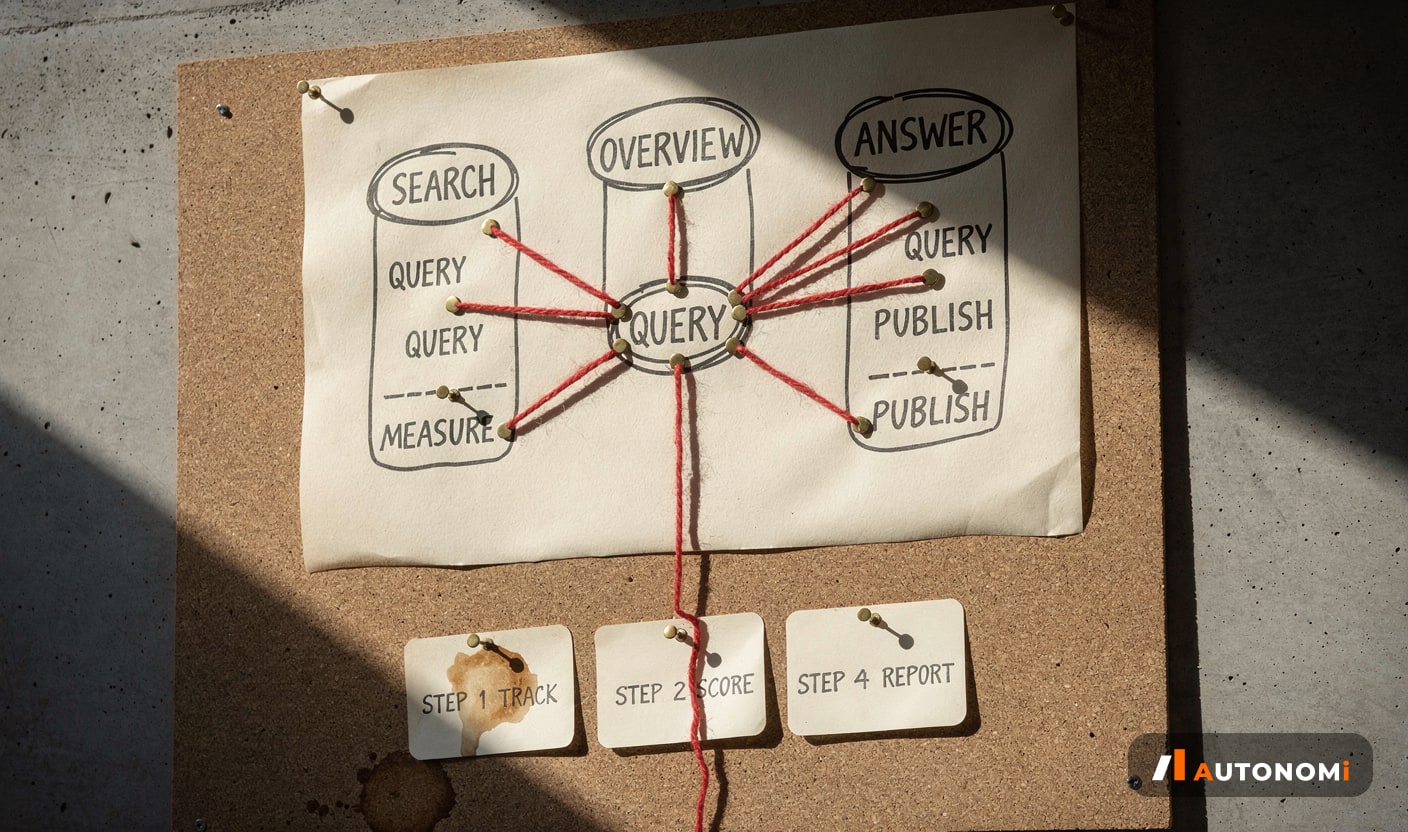
Where Does a GM's Day Actually Go?
The CBT News framing is appealing: AI will free general managers from operational noise so they can focus on culture, retention, and the customer experience. The problem with that framing is that it never specifies which operational noise is eating the most time. Vague operational noise is hard to fix. The campaign management grind is not vague at all.
Ask a GM at a mid-volume franchise store what happened between 8 a.m. and noon on a typical Tuesday. Budget reallocation emails from the agency. A compliance question about whether the weekend radio spot disclosed the APR correctly. A call from the office manager about why the inventory on the website doesn't match what Google Shopping is serving. A spreadsheet that needs to be assembled before the monthly review meeting. A pending approval in the ad platform that's been sitting since Friday because the account manager is on another account.
None of that is culture. None of it is retention. None of it is the floor-walk, the one-on-ones, the pipeline review that a GM's actual job description demands. It's ad-operations overhead, and it lands on the GM's desk because the agency's response cadence is measured in business days, not minutes.
The standard account management model at a regional automotive agency pairs one account manager with a portfolio of multiple dealerships, which structurally limits how fast any single store's questions get answered. That's not a complaint about agencies as individuals. It's the economics of the service model: one person can only respond to so many tickets in a day, and the tickets from the biggest-billing account go first.
The GM absorbs the gap. Not because GMs are disorganized, but because someone has to own the decision, and at most stores, that someone defaults to the person who can't say "I'll get back to you by Thursday."
What Does "Operational Noise" Actually Cost a GM?
There's a version of the AI-for-dealerships conversation that focuses entirely on the front of the house: chatbots that handle inbound leads at 2 a.m., AI scheduling tools that book service appointments, voice agents that handle the "is my car ready?" call. Those are real products solving real problems. They are not, however, the time drain that costs a GM's store the most.

The hidden cost is in the decision overhead that ad-operations creates for store leadership. Every campaign that requires a human approval touchpoint, every compliance question that bubbles up from the agency, every budget conversation that requires the GM to review a PDF before someone can move dollars between channels: all of it creates what operations researchers call decision debt. Small decisions that shouldn't require a senior person's attention but do, because the system isn't built to handle them autonomously.
The math compounds quickly. A GM who fields four campaign-related questions per day, each requiring ten minutes of context-switching and response, burns more than three hours a week on ad operations alone. Over a month, that's the equivalent of nearly two full working days redirected from the floor to the inbox. At a store with serious turn pressure, two days of GM attention is measurable in deals.
The industry conversation about AI productivity focuses almost entirely on what happens when AI replaces front-line labor. That framing misses the more expensive problem. General managers at franchise dealerships are consistently identified in dealer-group operational reviews as the single highest-leverage role in a store: the person who sets the culture, coaches the desk, closes the difficult deal, and keeps the best people from leaving. When that person is fielding approval requests about Google ad copy, the cost isn't in their hourly rate. It's in the deals that didn't close, the conversations that didn't happen, the salesperson who left because no one had time to develop them.
AI frees GMs to do their real job only if it removes the work that shouldn't reach them in the first place. The cabin AI story is an OEM story. In-vehicle AI assistants being developed by OEMs operate within the vehicle's native systems and are designed to improve the driving and ownership experience, not dealership operations. The AI that changes a GM's day runs in the ad account, not the center console, and it runs at midnight while the GM is asleep.
Why Does Campaign Management Still Require a Human in the Loop?
The honest answer is that most of the systems managing dealer advertising were not designed to run without one. The agency model, by definition, requires human account management as the delivery mechanism. The platform-direct model, where a GM or marketing coordinator runs campaigns in-house, requires a trained human to monitor performance, adjust bids, reconcile inventory, and flag compliance issues. Both models put a human at the center of the loop not because that's more effective, but because the alternative didn't exist until recently.

The specific tasks that create GM-level escalations fall into four categories, and none of them require strategic judgment. They require speed, consistency, and tolerance for repetition.
First: inventory reconciliation.
New-vehicle inventory across U.S. franchise dealerships runs at roughly 70 to 90 days' supply — meaning the average unit sits on the lot for ten weeks or more before it sells, according to Cox Automotive's vAuto Live Market View data. That slow turn creates a deceptively durable compliance risk: a vehicle that sells on any given day can keep running in paid search, social, and display ads for hours or days afterward if feeds aren't reconciled in real time. AutoTrader's dealer guidelines require removal from inventory feeds within 24 hours of a sale, and the FTC has stated that advertising unavailable vehicles is illegal. Every sold unit left live in an ad is both a wasted impression — spending against a conversion that can never happen — and a regulatory exposure your agency is almost certainly not monitoring at midnight.
Every sold unit that stays live in an ad is both a compliance exposure and a wasted impression. Keeping ads current requires a daily diff between what's in stock and what's being advertised, followed by surgical updates to every affected campaign. Agencies batch this. Batch cadence means stale creative. Stale creative means a customer clicks through to a VDP for a car that sold three days ago.Second: budget reallocation. A dealer's optimal spend distribution across channels is not static. It shifts with inventory mix, OEM incentive cycles, and competitive pressure. The right allocation on the first day of a model month is not the right allocation on the twenty-eighth. Adjusting it requires someone to look at the data, reason about it, and move dollars. If that someone is an account manager with a full portfolio, the adjustment happens when they get to it.
Third: compliance review. Every new creative, every updated offer, every seasonal headline needs to clear a set of regulatory and OEM brand guardrails before it serves. When compliance review is a human queue, it becomes a bottleneck. The GM gets called when something is stuck, or worse, when something incorrect already served.
Fourth: reporting. The weekly or monthly performance summary that should inform strategy instead becomes a data-assembly project. Someone has to pull numbers from the ad platforms, format them, write a narrative, and get it in front of the people who make decisions. That someone is often the GM, or the marketing coordinator who should be doing something with more leverage.
All four of these tasks have one thing in common: they are mechanical and they are daily. The constraint is not human intelligence. It is human availability.
What Does Autonomous Ad Operations Actually Look Like at the Campaign Level?
The honest version of the AI-for-ad-operations pitch is not about dashboards or recommendations. It's about a system that executes the daily cycle without a human touchpoint, and does it with enough precision that the outputs can be trusted without spot-checking every decision.
The inventory-diff rebuild is the clearest example. AEGIS runs a per-dealer inventory reconciliation every day, scraping the dealer's live website, diffing it VIN by VIN against the prior state, and rebuilding only the affected ad groups across every paid channel AEGIS manages, so the campaigns serving at 9 a.m. reflect what is actually on the lot that morning.✓ Sep 1 Unchanged creative carries forward. Sold units come down. New arrivals go live. The GM never touches it.
Budget allocation follows the same pattern. AEGIS makes a single daily allocation decision across every paid sub-channel it manages, reasoning over the full portfolio as one problem rather than making per-channel adjustments in isolation, so dollars shift to where the market opportunity is highest without requiring a human to initiate the move.✓ Sep 1 When a dealer wants to lock a specific allocation, the lock is honored precisely. Everything outside the lock stays fluid.
Compliance runs before anything serves. Every piece of ad copy and every landing-page assertion passes through a three-stage review before it reaches the ad platform: a strategist stage that identifies regulatory surface area, a composer stage that writes compliant copy, and a verifier stage that confirms the output before spend is approved.✓ Sep 1 The GM doesn't need to be in that loop because the loop closes before the question ever reaches the GM's inbox.
The same logic applies to OEM offer matching. AEGIS captures OEM incentive terms from the manufacturer's own structured offer data, field by field, and matches them to the dealer's in-stock inventory, so the advertised payment on any given model reflects the current published program, not a manually entered figure that may have expired last Tuesday.✓ Sep 1 When the OEM changes the program, the ads update. No one has to file a ticket.
This is what autonomous ad operations looks like in practice. Not a dashboard that surfaces insights and waits for a human to act. A system that acts, with the dealer's guardrails in place, and surfaces the decisions that genuinely require a human, which turns out to be a small fraction of the total work.
As we've argued before, the in-cabin AI story and the operational AI story are aimed at completely different problems. One is a product feature. The other is a structural change in how a store is run.
Who Loses When Ad Operations Runs Autonomously?
The agency. Not the agency as a concept, but the agency as an operational intermediary whose value proposition was always "we manage this so you don't have to." When the management layer runs autonomously, the justification for the management fee erodes. What's left is strategy: knowing which markets to enter, which creative thesis to run, how to read a competitive shift. That's valuable. But it's not what most automotive agencies are billing for at the line-item level.
The in-house marketing coordinator who spends two days a month assembling the performance report also loses a function, though not necessarily a job. A coordinator who is freed from report-assembly and campaign-monitoring can spend that time on work that requires actual judgment: developing the store's organic content strategy, building the community relationships that drive referral volume, owning the social presence that the autonomous system doesn't touch.
The GM, if you want to be precise about it, doesn't lose anything. The work that was landing on the GM's desk was never the GM's work to begin with. It was ad-operations overhead that got escalated upward because the system had no better place to put it. Removing that overhead doesn't reduce the GM's scope. It restores it.
The conversation about AI and dealer productivity has been focused on the wrong layer. The BDC is one part of the story, as we've covered when looking at what AI lead follow-up actually means for the P&L. But the GM's time drain starts earlier, in the campaign layer, before a lead even exists. Fix that layer and the GM gets their job back. Leave it broken and no amount of culture-focused leadership advice changes the calculus.
How AUTONOMi Approaches the GM Productivity Problem
AUTONOMi is built around a specific premise: the work that currently generates GM-level touchpoints in ad operations is not strategic work. It's execution work. AEGIS runs the full daily ad-operations cycle autonomously: inventory reconciliation, cross-channel budget allocation, compliance review, OEM offer matching, and performance analysis, all without requiring a human touchpoint on any individual step.
Every allocation shift, every campaign change, and every compliance decision is hash-chained in a dealer-accessible audit trail, so the GM can see exactly what ran, why it changed, and what the system decided, without having to approve each action in advance. The audit trail is the accountability layer that makes trust possible. The GM knows the system isn't operating as a black box because every decision is recorded and readable.
When a GM wants a performance summary, AEGIS writes the analysis, pulls the data from the advertising platforms' own reporting, and delivers a formatted document, without requiring a coordinator to assemble it or an agency to schedule a review call. The report is there when the GM wants it, authored from real account data, with the findings and the recommendations already written.
For stores that already run some channels in-house or through a separate agency relationship, AEGIS supports per-channel opt-out: any channel can be handed back to the dealer, at which point AEGIS neither manages nor counts any activity on it, and the budget redistributes across the channels AEGIS does manage. The platform is designed to fit into how a store actually operates, not to require a full rip-and-replace before it runs.
The GM productivity case for AI isn't about what AI does at the front of the store. It's about what stops reaching the GM's desk from the back of the ad account. The search for a better agency relationship is really a search for accountability, and accountability at scale means a system that doesn't require a senior person's sign-off on every daily mechanical task.
What Happens to a Store When the GM's Job Is Actually the GM's Job?
The industry's framing of AI as a culture-and-retention tool isn't wrong. A GM who isn't fielding compliance questions at 9 a.m. has more time for the floor-walk that catches the salesperson who's struggling before they go to a competitor. A GM who isn't assembling the monthly report has more time for the one-on-one that turns a good closer into a great one. Those outcomes are real. The conversation just has the causality slightly backwards.
AI doesn't free the GM to focus on culture by giving the GM better culture tools. It frees the GM to focus on culture by removing the ad-operations work that was consuming the time culture requires. The path runs through the campaign layer, not around it.
For dealer groups running multiple rooftops, the math scales. A group operations director whose morning starts with three stores' worth of ad-approval requests is structurally unable to do group-level strategic thinking. Run the campaign layer autonomously across all three stores and that same director can focus on the question that actually drives group performance: which market is underserved, which model mix is misaligned, which store has the ceiling and needs investment rather than maintenance.
That's the AI productivity story worth telling. Not the cabin. Not the chatbot. The system that completes the daily execution cycle before the GM walks in the door, so the first decision the GM makes at 8 a.m. is a real decision, about a real strategic problem, with the full force of their attention behind it.
If your store's morning starts with campaign approvals instead of strategy, the problem isn't the GM. The problem is the system that requires the GM's attention to move. See what it looks like when the execution layer runs on its own.