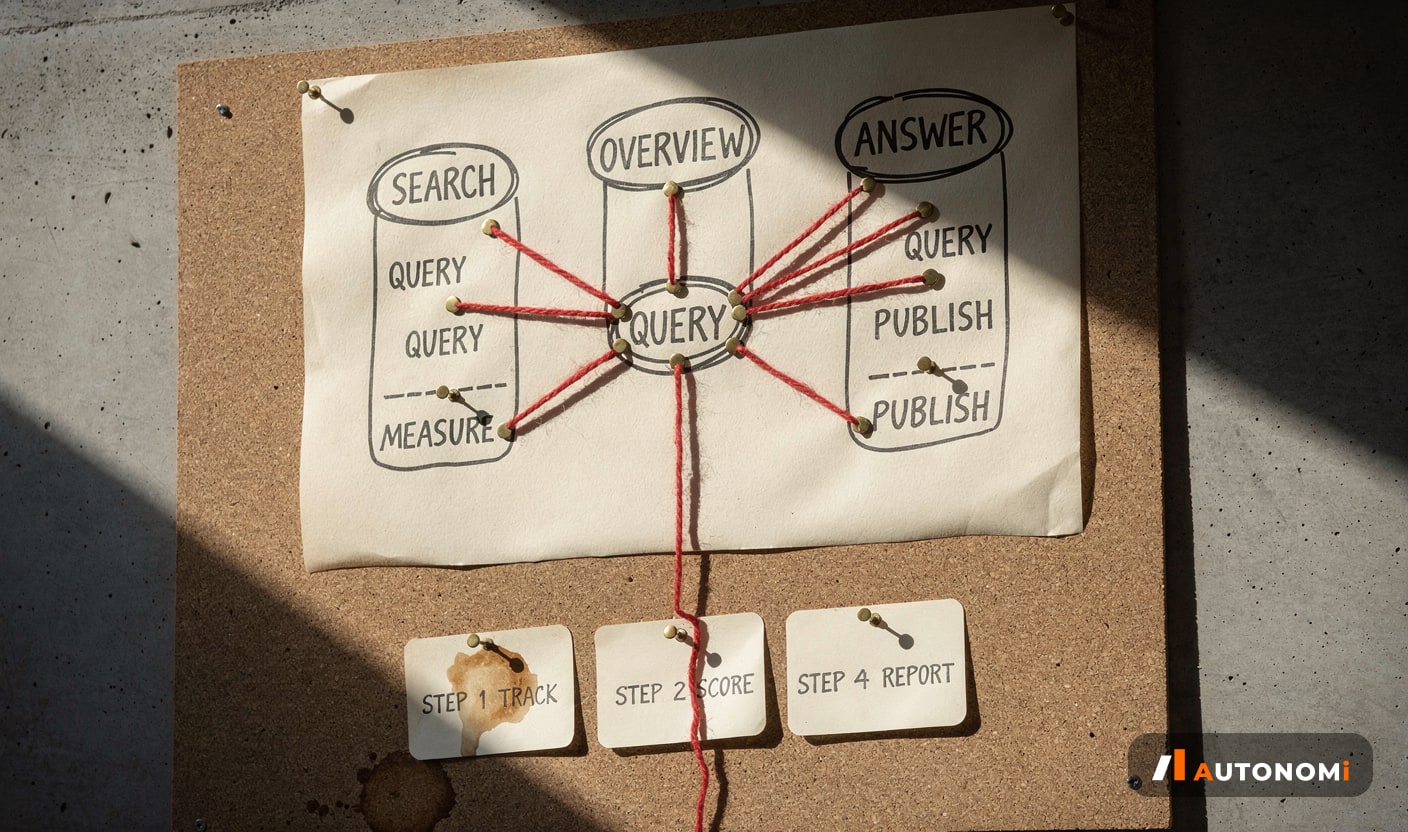
Most dealer marketing budgets span five or six channels. Most agency teams optimize each one separately — with no mechanism to move money between them when performance shifts. That fragmentation isn't an operational quirk. It's the business model.
The Silo You're Paying For
Here is how the typical dealership's paid media portfolio is actually run: a Google Ads specialist manages Search and Performance Max. A Meta partner runs Facebook and Instagram. Someone else — maybe an agency add-on, maybe a second vendor — handles TikTok or Microsoft Ads. If you've added Connected TV, that's almost certainly a third party with its own dashboard and its own monthly invoice.

Each of those relationships has a management fee attached. Each of those teams reports in its own format, on its own cadence, using its own attribution model. And none of them talk to each other about the most important operational question in your media plan: given what happened this week across the portfolio, where should next week's dollars go?
The answer to that question — the one that actually determines whether your monthly spend produces efficient outcomes — happens by default. Nobody makes the call. The Google budget stays at what it was set to in January. The Meta budget moves based on whatever the account manager proposed in the last QBR. The TikTok budget is whatever you agreed to in the contract. And when Google's CPL spikes in a competitive weekend, nobody pulls dollars from Meta to compensate, because that would require someone whose job spans both.
That person doesn't exist at your agency. Their org chart doesn't allow for it.
How Agency Teams Actually Work
The agency multi-channel pitch sounds like coordination. The reality is adjacent silos with a shared logo on the proposal deck.
Google Ads specialists are Google Ads specialists. Their expertise — their certifications, their tooling, their incentive structure — is entirely contained within the Google ecosystem. When a Meta campaign is oversaturating your conquest audience and driving up your cost-per-engagement on Search, they don't see that. They see their CPL. They optimize their CPL. They report their CPL.
Meta account managers have the same tunnel vision in the opposite direction. They're evaluating reach, frequency, and conversion events inside Meta's reporting suite. They have no view into what the Search campaign is doing to in-market demand, or whether the audiences they're building overlap with a Google Demand Gen segment you're already paying to reach.
This is the information asymmetry the monthly agency report was designed to obscure. Each channel looks like it's performing. The aggregate portfolio is bleeding efficiency, and no one in the room is accountable for the gap between what each channel reports and what the portfolio actually costs to produce a buyer.
The problem isn't that agency teams are incompetent. The problem is structural: a human team cannot hold five channels in active tension simultaneously, continuously, at the speed the platforms actually move.
What Cannibalization Actually Costs
Channel cannibalization is the tax you pay for running a fragmented portfolio. It's also the tax your agency has the least incentive to surface, because surfacing it would require admitting that two budget lines they both manage are working against each other.

The mechanics are straightforward. You're running Google Search campaigns capturing in-market shoppers searching your brand and model terms. You're also running Performance Max, which — absent tight controls — will bid on those same high-intent queries and compete with your own Search campaigns for the same click. Meanwhile, your Meta retargeting pool is built from your website visitors, many of whom already saw your Search ad, clicked it, browsed your inventory, and left. You're paying to reach them again through a second attribution path that will claim a conversion assist regardless of whether the Meta exposure actually changed their behavior.
Add TikTok's discovery layer and Microsoft's audience network into the mix and you now have five channels with overlapping audience pools, competing bid strategies, and zero cross-channel deduplication. Every dollar that fires on a consumer already converted by another channel is pure waste. The spend shows up in five dashboards as five legitimate line items. The dealer sees five success stories. The actual cost-per-acquired-buyer is something nobody calculated.
The CFO question that exposes this — which channel, at which cost, produced which buyer — has no answer in a siloed agency model because the data to answer it never gets assembled. Each channel's data lives in each channel's reporting tool, managed by each channel's team, in service of each channel's performance narrative.
The Measurement Gap That Keeps the Silo Alive
The silo persists because the measurement model rewards it.
Platform attribution is last-click or view-through by default, depending on who's measuring. Google credits Google. Meta credits Meta. Both will claim the same conversion if a buyer touched both channels in the purchase window — and in automotive, almost every buyer does. The median car shopper visits multiple websites, sees ads on multiple platforms, and takes weeks between first search and dealership contact.
In that environment, giving each channel its own attribution model and its own reporting cadence produces a number that no CFO should trust: the sum of each channel's claimed conversions almost always exceeds the actual leads your CRM received. The difference is overlap — the same buyer being counted twice or three times across the platforms that touched them.
Your CRM knows the actual number. Your ad platforms, separately reported by separately incentivized teams, are each telling you a story that adds up to more than reality. The agency has no structural reason to reconcile the two, because reconciliation would reduce the total conversion count they're reporting and make the management fees look harder to justify.
This is not a conspiracy. It is the entirely predictable output of a model where each team is measured on its channel's performance, not the portfolio's efficiency.
Why This Problem Is Structurally Impossible for Agencies to Solve
Solving cross-channel budget orchestration requires three things that human agency teams cannot provide simultaneously.
First, it requires a unified view of performance across every active channel in real time — not a weekly roll-up email, not a monthly dashboard PDF, but a live read of what's happening across Google Search, PMax, Demand Gen, Meta, TikTok, Microsoft Ads, and CTV simultaneously, with enough granularity to know whether spend is efficient or bloated at the campaign level.
Second, it requires a rebalancing mechanism — the ability to move budget from a channel that's oversaturating its audience toward one that has room to convert incremental demand, within a window that matters. A human team rebalances quarterly, at best. By the time the QBR slides are built and the budget revision gets client approval, the market condition that made the rebalance necessary has moved on.
Third, it requires that the person making rebalancing decisions has no channel loyalty. They cannot be the Google specialist who benefits from keeping Google's budget intact. They cannot be the Meta account manager whose renewal depends on Meta's spend staying above a floor. The budget decision has to be made by an entity whose only optimization target is portfolio efficiency — and whose compensation is not tied to any channel's line item.
No agency org chart produces that entity. The agency value proposition was built on the execution layer — the human expertise required to run campaigns on platforms that were opaque and technically demanding. That layer has been systematically automated by the platforms themselves. What remains — the strategic layer, the cross-channel orchestration layer — is exactly the problem agencies are least equipped to solve, because solving it would require dismantling the per-channel billing model that generates their margin.
The dealer is paying management fees on every silo. The agency is incentivized to keep every silo funded. These are not aligned interests.
How AUTONOMi Orchestrates the Portfolio
AEGIS — AUTONOMi's AI core — was built for exactly this problem. Not channel-by-channel campaign management with a unified logo on the proposal, but a single budget engine that holds all channels in active tension and rebalances across them in each planning cycle.
The channels AEGIS manages are Google Search, Performance Max, Demand Gen, Meta (Advantage+ Shopping, Catalog Sales, and Lead Ads), TikTok, Microsoft Ads, and — for dealers on the Connected TV module — CTV and streaming audio. These are not separate teams with separate dashboards. They are inputs to a single budget-balancer that evaluates performance across the full portfolio and allocates accordingly. When Search CPL rises, the balancer sees that signal in context of what Meta and TikTok are doing with the same audience. When a conquest segment is saturating on one channel, spend shifts to where incremental reach is still available.
This rebalancing is not a quarterly process. It runs on the cadence the platforms actually demand — not when the account manager finds time to pull the numbers.
AEGIS also constructs and deploys the campaigns themselves: Search ad groups, PMax asset groups, Demand Gen creatives, Meta ad sets, TikTok Automotive Inventory Ads for new and used inventory, Microsoft Search campaigns. Every campaign that goes live has passed through AXIOM — AUTONOMi's policy engine — which enforces spend caps, OEM brand guardrails, and compliance review on every piece of ad copy before a dollar is committed. The dealer does not pay a per-channel management fee. The platform is what it is: one system, one monthly fee, no silo markup.
There is also no channel loyalty in the optimization logic. AEGIS has no Google quota to protect. It has no Meta renewal to worry about. Its only objective is portfolio efficiency — and the audit trail for every budget decision is hash-chained and dealer-readable, so the dealer can verify what moved, when, and why. That transparency is structurally impossible to replicate when each channel's performance data lives in a separate agency relationship.
The Dealers Who Figure This Out First Will Define the Efficiency Floor
The dealerships still running fragmented agency portfolios are not just paying extra management fees. They are paying a compounding inefficiency tax — every week the budget doesn't rebalance, every conversion that gets double-counted, every audience that gets saturated on one channel while another channel sits underallocated. That tax doesn't show up as a line item. It shows up as a CPL that's higher than it should be, a budget that seems too small, and a monthly performance review where every channel looks fine but the aggregate result feels wrong.
The dealers who close that gap first don't just save on fees. They build a structural cost advantage over every competitor still paying for five siloed relationships to not talk to each other. In a margin-compressed environment, that advantage compounds faster than any individual channel optimization ever could.
If you want to see where your current budget actually allocates across channels — and what a unified portfolio model would look like against your spend — model your dealership's media mix with AUTONOMi's budget tool before your next agency QBR.
Automotive research is rarely a single-session, single-channel event. Industry studies from J.D. Power and Cox Automotive have consistently found that vehicle shoppers spend multiple weeks researching before contacting a dealership, and commonly do so across more than one device and more than one site. The exact shape of that journey varies by shopper and vehicle segment, but the pattern agencies built around a single-channel, single-touch attribution model no longer holds — most buyers are exposed to a dealership's marketing across several platforms well before they ever pick up the phone or fill out a form.