Why Does a New Brand Arrive at the Dealership Before Any Buyer Has Searched for It?
The franchise agreement is signed. The brand standards binder is on the desk. The first units are inbound. And the dealer's website, its blog, its organic search footprint, its Google Search Console property: all of them are blank on the new marque. Zero indexed pages. Zero keyword rankings. Zero historical queries. The buyer who will eventually walk onto that lot has not typed the brand's name into a search bar yet, because they have never heard of it.
That is the precise moment a dealer's content infrastructure either proves its value or exposes its design flaw.
Greenhous Group confirmed this week that it will represent Lepas, Chery Automobile's new UK sub-brand, as the Chinese automaker accelerates its push into the British market with a plug-in hybrid and EV lineup. Lepas has secured franchisees across the AM100, with first customer deliveries arriving in September 2026. It is a legitimate commercial bet by serious dealer groups. It is also, content-wise, a launch into a vacuum: the brand name produces no meaningful autocomplete suggestions, no Reddit threads comparing it to a rival, no owner forums, no "Lepas L8 review" search volume to capture.
That vacuum is the problem this article is about. Because the content approach that works for a Ford dealership adding a certified pre-owned line, or a Toyota store launching a hybrid finance offer, does not work here. And most dealer content programs were never designed for the harder case.
What Does a Calendar-Based Content Program Do When There Is No Calendar to Follow?
The majority of dealer blog programs run on a content calendar. The calendar has slots: a Black Friday finance post in November, a tax-refund push in February, a summer road-trip "is your vehicle ready" article in June. The calendar was built for the dealer's established inventory, against brands buyers already know how to search for.
A new brand breaks the calendar completely. There is no seasonal incentive to publish around. There is no OEM-funded co-op asset to repurpose. There are no "competitors near me" queries already at volume that the dealer can intercept. The calendar approach was, in any case, a response to the market that exists: it does not create the market that doesn't yet.
This is the core problem with treating content as a scheduling function rather than a research function. A calendar tells you when to publish. It does not tell you what questions buyers will ask once a new brand enters their field of awareness, or what information gap the dealer needs to fill before those questions reach meaningful volume. By the time the question is popular enough to appear on a spreadsheet of "high-volume keywords," the window to become the answer is already narrowing.
The dealers who will own the search surface for Lepas in six months are not the ones who publish most. They are the ones who published first, on the right angles, before the OEM's paid media created the first wave of awareness-driven searches.
What Questions Does a Buyer Actually Ask When They Encounter an Unfamiliar Brand?
The question structure around a genuinely new brand is different from the question structure around a known one. A buyer researching a new Honda Civic is deep in comparison mode: trim levels, fuel economy versus a Corolla, finance rates, local dealer inventory. The search intent is transactional and specific because the brand is already trusted and the buyer is in the decision layer.

A buyer who just saw a Lepas ad, or heard a friend mention it, or read a news item about Chery's UK expansion, is in a completely different mental state. Their questions are foundational:
Is Lepas a reliable brand? Who makes it? How does it compare to better-known Chinese EVs already on sale? What does ownership look like, practically: where does it get serviced, are parts available, what does the warranty actually cover? Will it hold its value?
These are not transactional queries. They are trust-building queries. And no franchise dealer has answered them yet, because no franchise dealer has written the content yet. The OEM's own marketing will not answer them thoroughly either: brand websites are built to sell the aspiration, not to address the ownership scepticism that is entirely rational when a buyer is considering a marque they have never encountered before.
The dealer who answers those trust-building questions in a well-structured, locally anchored, indexed article is not just generating organic traffic. They are doing the pre-purchase work that a test drive cannot do, because the buyer has to trust the brand enough to book one first.
This is the content opportunity a calendar-based program misses entirely, because it is not about timing a post to a known seasonal intent. It is about building the structured claim surface that earns AI-citation and search placement before the demand exists at volume.
Why Does Organic Content Need to Precede Paid Media, Not Follow It?
The standard launch playbook in automotive is paid-first, organic-later. The OEM funds a national awareness campaign. The dealer runs local paid search against the brand terms. Organic content is produced, if at all, after the market has been activated: a launch blog post, a social share of the press release, a VDP that went live when inventory arrived.

That sequence is backwards for a new-brand launch, for a structural reason: organic content takes time to be indexed, crawled, and ranked. A page published the day inventory arrives will not be competing for page-one placement on week one. The paid campaign, meanwhile, fires immediately, generates awareness searches that the dealer's own site is not positioned to capture, and spends money educating buyers who then go looking for information the dealer has not yet published.
The window is not six weeks after launch. It is the six weeks before. Publish a piece on Lepas L8 ownership questions in August and it has a real chance to be indexed and earning impressions in September, when the OEM's paid campaign creates the first wave of branded search. Publish it in September and you are chasing your own paid spend with an organic asset that won't compete until November.
The dealers who use quiet periods to build topical authority are the ones who close when demand returns. The same principle applies at brand scale: the dealer who publishes before the OEM's media fires captures the earned attention that paid media creates, instead of watching it flow to a national aggregator or a competitor who happened to write something first.
Most dealer content programs have no mechanism to operate ahead of market demand. They respond; they do not anticipate. New-brand launches are the sharpest test of whether a program can do either.
How Does a Dealer Build Search Authority for a Brand Nobody Has Searched for Yet?
The practical answer starts with keyword research conducted differently than the standard tool output suggests. When a brand is new, the high-volume branded queries do not yet exist. But adjacent queries do: the ownership-category questions that apply to any new entrant, the comparison queries against established brands in the same segment, the service and warranty questions that sceptical buyers ask before they commit to a marque without a long track record.
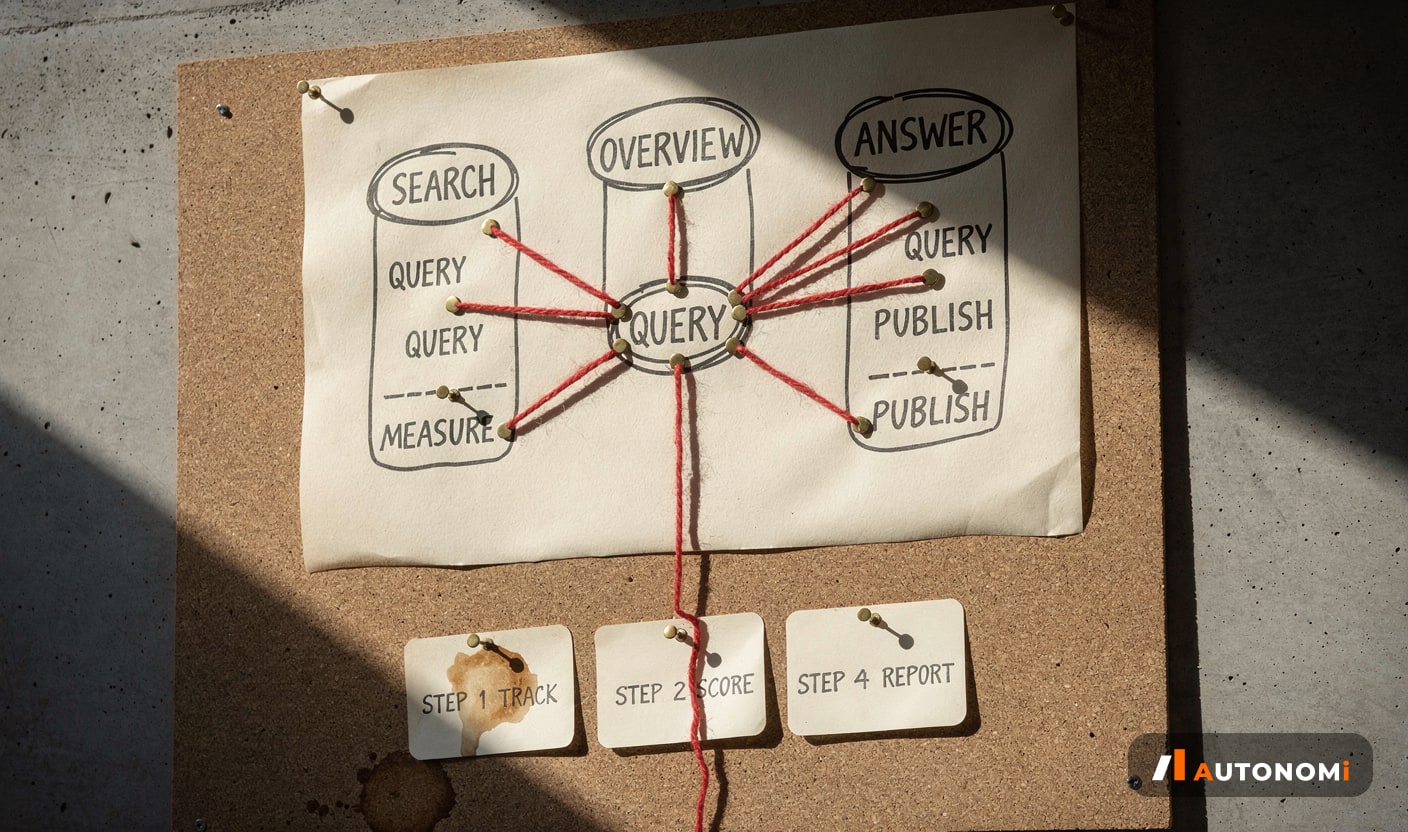
ECHO, AUTONOMi's organic content engine, researches keyword angles using Google Trends, Google Autocomplete, and Reddit signals.✓ Sep 21 For a known brand, those signals produce a list of established high-volume queries to write against. For a new brand, the same signals produce something more useful: the adjacent intent categories that the brand's entry creates without yet having generated their own search volume. A buyer who just heard of Lepas and is forming their first opinion will type something into Google that morning. The question is whether the dealer's content is waiting for them.
Topic categories worth building early for any new-brand launch include: reliability and quality perception for the parent manufacturer; service network coverage and parts availability; comparison articles against the established rivals in the same price band and segment; ownership cost articles (insurance, charging infrastructure for EVs, cost of scheduled maintenance); and warranty explainers that answer the question buyers are actually worried about rather than the one the OEM's FAQ page chooses to address.
None of these require the dealer to have a unit on the lot yet. All of them require the dealer to have a content engine that can research and produce before inventory arrives.
The AI agent writing dealer blog content while the GM sleeps is not a metaphor for the future. It is a description of the gap between the dealers who will own Lepas search real estate by Q4 2026 and the ones who will still be planning their first content calendar entry for the brand when it arrives.
What Does an Inventory-Native Content Program Look Like for a New Brand?
Inventory-native does not mean inventory-first. It means the content program tracks with the inventory reality at every stage: before units arrive, when units arrive, as units sell, and as the mix on the lot evolves.
Before arrival: the program produces trust-building and comparison content anchored to the brand's story and the buyer's rational scepticism. The dealer's blog becomes the most thorough local source of information about the new marque, indexed and earning impressions before the first test drive is booked.
At launch: ECHO surfaces live inventory and offers on dealer blog articles via a dynamic widget, availability-gated so that a model with no in-stock units is never advertised, and linking to the dealer's live inventory search rather than a static page.✓ Sep 21 When the first Lepas L8 units land, the articles that have been earning trust for six weeks can show the actual cars in stock. The content that built the audience becomes the surface that closes the sale.
As inventory evolves: ECHO generates SEO-optimized blog posts and publishes them to the dealer's own website✓ Sep 21, meaning every piece of content lives in the dealer's own indexed domain rather than a third-party platform. When the L6 and L4 arrive later in the model year, the blog already has an audience and a ranking history to leverage.
The loser of this model is the content calendar program built for the wrong problem. When the market is stable and the brands are known, a calendar is an efficient scheduling tool. When a new brand lands on the lot, it has nothing to say until the calendar catches up, which is always too late.
Getting cited by AI answer engines is a data-quality and structure problem, not a publishing-volume problem. An article about Lepas reliability that is well-structured, published early, and anchored to verifiable claims has a materially different chance of being surfaced in an AI-generated answer than one published after the query volume has drawn in every national aggregator. First-mover advantage in AI citation is real; the mechanism rewards early, authoritative content over later, lower-quality alternatives.
How AUTONOMi Approaches the New-Brand Content Problem
ECHO plans per-dealer content strategy, produces SEO-optimized blog posts, and publishes them to the dealer's own blog✓ Sep 21, building the dealer's own indexed domain rather than a content farm that benefits no one.
For a new-brand launch, the practical sequence is this: ECHO researches keywords and topic angles using Google Trends, Google Autocomplete, and Reddit signals✓ Sep 21 to identify the adjacent intent categories the brand's entry creates before those categories generate high search volume on the brand's own terms. The result is a set of articles that address the questions buyers are already asking about the brand's category, the competitor vehicles it will displace, and the ownership realities a sceptical buyer needs answered before booking a test drive.
ECHO self-critiques drafts via an in-loop quality gate before publish, which matters for new-brand content specifically because the factual floor is lower. There is less established information to draw on, and the temptation to fill word count with generic claims is higher. A quality gate that runs before publish catches that problem at the article level.
ECHO also generates social posts for TikTok, Instagram, Facebook, LinkedIn, X, Threads, and YouTube Shorts from each published article, so the organic search play and the social distribution play run from the same content event, rather than requiring separate production capacity for each channel.
The widget matters too: the dynamic inventory widget on ECHO articles is availability-gated, meaning a model with no in-stock units is hidden and never advertised. For a new brand where inventory arrives in phases, that gate is not a minor technical detail. It is what prevents the dealer from advertising a car they cannot sell, which is the fastest way to destroy the trust that the pre-launch content took six weeks to build.
Worth stating plainly: ECHO is not a blog-post scheduler. ECHO is the organic content engine that writes dealer blogs; a separate system produces AUTONOMi's own editorial content. The same research and production capability generates content for the dealer's own website. The infrastructure that handles new-brand launches is not a roadmap item. It is operating now.
The Dealers Who Win the New-Brand Content Race Will Not Win It at Launch
They will win it in the months before. The content moat for a new brand is built in the pre-launch window, when the paid campaign has not fired yet, when no aggregator has indexed the model, when the buyer who will eventually walk into the showroom is somewhere between "I've heard of this" and "I've started looking." That buyer is the most valuable one: they have intent but have not yet been captured by a competitor's content or a national listings site.
The dealers taking on Lepas, and the dealers who will take on the next new Chinese EV brand, and the next revived European nameplate, and the next newly-franchised import, are all facing the same decision: whether their content infrastructure can operate ahead of the market it is supposed to serve, or whether it is built only to respond to demand that already exists.
Calendar-based content answers the second question. Inventory-native, research-driven content answers the first. They are not the same product, and the difference will show up in organic traffic numbers by Q1 2027 for the dealers who are signing franchise agreements right now. If you are one of them, the content clock is already running. Start building the organic surface for your new brand before the first unit lands, not after.