The dealers asking "how do I get my dealership cited by AI" are getting the wrong answer. They are being told to publish more content, add schema markup, and earn more backlinks. That advice describes how to rank on a Google results page in 2019. AI answer engines do not work that way, and treating them like a faster version of traditional search is the reason most dealer content never appears in an AI-generated answer at all.
The difference is not volume. It is structure. And if the content you are publishing cannot be extracted, attributed, and verified by a machine reading it at speed, it does not matter how often you publish it.
This is not a small distinction. It changes what you need to build.
Why Does Ranking on Google No Longer Mean Being Cited by AI?
Traditional search is a ranking problem. Crawlers index pages, algorithms score them, results are returned in order. The dealer who earns the top position gets the click. The entire discipline of SEO evolved to optimize for that one output: position.
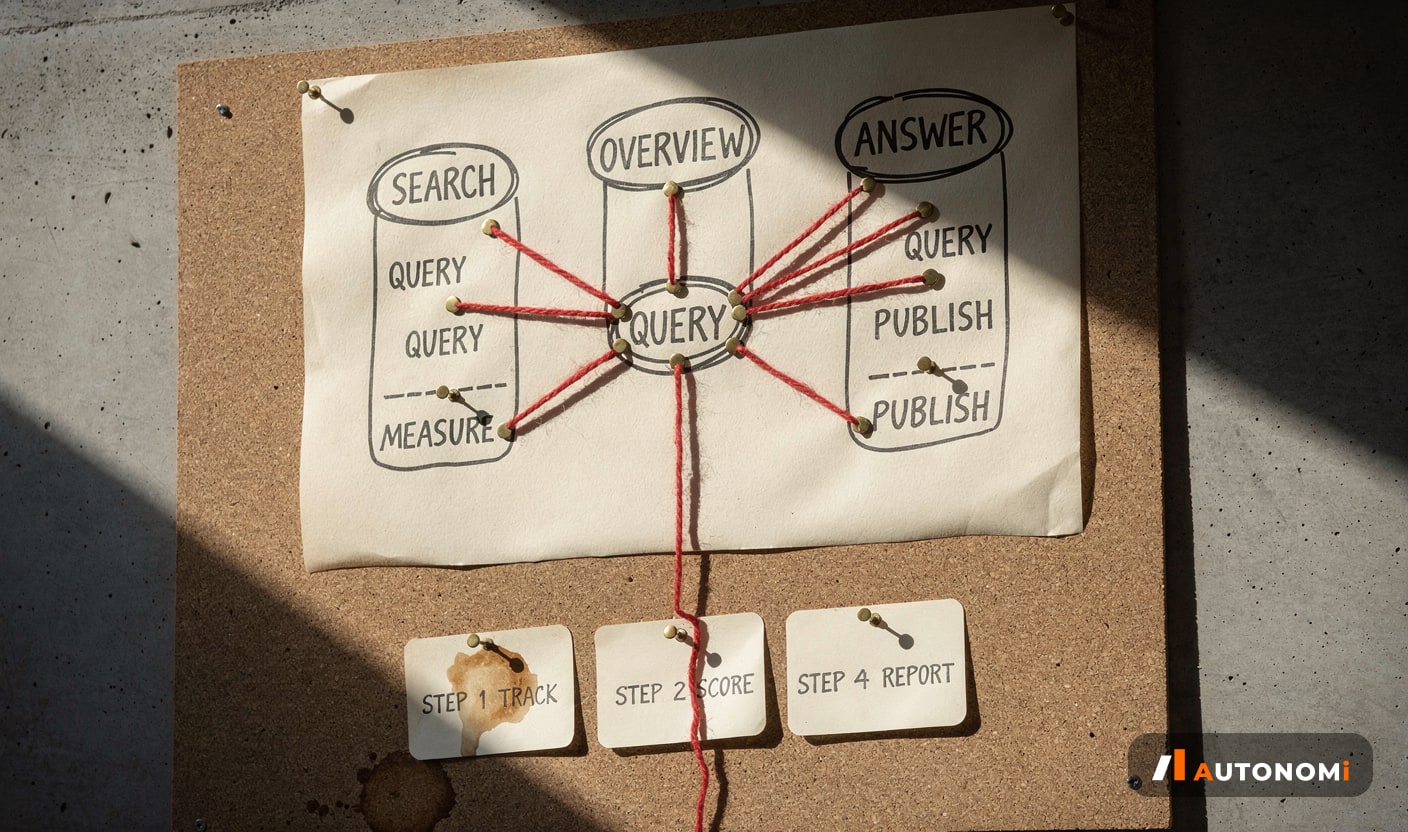
AI answer engines like Google AI Overviews, Perplexity, and ChatGPT Search do not rank pages and return them in order. They synthesize an answer and cite the sources they drew from. That is a materially different job. The selection criterion is not "which page ranked highest" but "which source provided a claim the model could extract, attribute, and verify."
A page can sit at position one on a Google SERP and never appear in a single AI-generated answer. Conversely, a page that would never crack the top ten for a competitive head term can become a consistently cited source in AI answers if its claims are structured in the way the extraction layer prefers.
Most dealer marketing teams do not know this yet. The agencies they work with definitely do not: the conversation about AI agents at dealerships has mostly pointed at desking, follow-up automation, and inventory management, not at how the content those dealers publish gets read and cited by AI systems that are now a real acquisition surface.
What Does an AI Answer Engine Actually Extract from a Page?
AI answer engines extract structured claims from content: a subject, a predicate, an object, and ideally a source that can be checked. When Perplexity generates an answer about the best dealer for a specific model in a given market, it is not reading your blog post as a narrative. It is pulling discrete assertions, checking whether they are attributable to a real source, and deciding whether to include them in the synthesized answer with a citation.

The structural properties that make a claim extractable are not complicated, but they are specific. The claim needs a clear subject. It needs a predicate that is falsifiable, not a marketing opinion. It needs an object that is concrete. And it needs a timestamp or a source that signals freshness, because AI answer engines weight recency: a fact with a verifiable date is more trustworthy than a fact with no date at all.
What fails the extraction layer: paragraph-length assertions that mix thesis with supporting evidence; superlatives and marketing language that cannot be verified against any source; claims about inventory, pricing, or incentives with no timestamp, which means they could be months stale; and general SEO filler content that restates the same sentence six different ways without advancing a single verifiable claim.
Google's own guidance on AI Overviews emphasizes that sourced, authoritative content is preferred for inclusion in AI-generated answers. That sounds like a truism until you realize how few dealer blog posts actually meet the bar: a sourced, timestamped, machine-readable claim about a specific vehicle, market, or financing condition.
How Do You Get Your Dealership Cited by AI?
The answer is not more content. It is content that is built for extraction from the sentence level up.
Each factual assertion in an article needs to exist as a discrete, verifiable unit: not embedded in a paragraph where the machine has to infer what the claim is, but explicit enough that an extraction layer can read it as subject-predicate-object and route it for verification. That verification step is what most dealer content skips entirely. A claim without a verifiable source is not a claim the AI can attribute. It is a claim the AI will ignore or, worse, one it will attribute to a source it can find that does make the assertion clearly.
Timestamps matter more than most content teams realize. AI answer engines apply recency weighting to cited sources, with content that carries a clear publication date and a verified "last confirmed" signal ranking as more trustworthy than undated assertions. A dealer blog post about Q3 incentive programs with no publication date and no indication of when the incentive figures were last checked is not useful to an AI answer engine. It is a liability: if the AI cites it and the figures are stale, the AI's answer is wrong, and the model learns to weight that source lower going forward.
The third requirement is corroboration. For high-stakes claims, specifically pricing, financing terms, lease figures, and warranty language, AI systems apply a higher corroboration standard before surfacing them as cited answers. A claim about a lease rate stated once, on one page, with no external corroboration, is treated with appropriate skepticism. The same claim, anchored to a manufacturer's own published offer data, with a timestamp and a verifying source, behaves completely differently in the extraction layer.
None of this is implemented by publishing more posts per month. It is implemented at the infrastructure level, before the first word of the article is written.
Why Is LLMO a Data-Quality Problem, Not a Publishing-Volume Problem?
The advice to "publish more" is a volume answer to a quality problem. It maps directly onto the mental model of traditional SEO, where more indexed pages created more surface area for rankings. That logic does not transfer.
Your dealer blog is already being read by AI answer engines. The question is not whether Perplexity and AI Overviews are crawling it. They are. The question is whether what they find when they crawl it is in a format they can extract, attribute, and verify. For the overwhelming majority of dealer blogs, the answer is no, and adding more posts to the pile does not change that answer.
Think about what an AI answer engine actually needs from a piece of dealer content to cite it. It needs to know the claim was true as of a specific date. It needs to know who is making the claim. It needs to be able to route the claim for independent verification rather than taking the dealer's own word for it. And it needs the claim to be expressed at the sentence level, not dissolved into a paragraph of background context.
Most dealer content operations do not produce content at that level of precision because they were never asked to. The brief they were given, whether from an agency, a marketing coordinator, or an AI content tool, was "write something about this model" or "post about this month's incentives." The output is readable prose. It is not a structured claim graph. It cannot be extracted at machine speed and attributed with confidence, which means it does not get cited.
This is the gap. It is not a content gap. It is an infrastructure gap. And the dealers who close it first are the ones whose content gets cited while competitors' posts sit unread in AI training data.
When the buying cycle extends, the dealers who are building topical authority right now are the ones who close the deal when the buyer is finally ready, precisely because their content is the content AI answer engines have learned to cite. That is not a nice-to-have. It is a structural advantage that compounds every month the gap stays open.
How AUTONOMi's ECHO Claim Graph Builds the Surface AI Answer Engines Prefer
ECHO, AUTONOMi's organic content engine, ships every article with a machine-extractable claim graph: every verifiable factual assertion in the article becomes a structured row carrying the claim's subject, predicate, object, a verbatim supporting quote from an external source, a verifier, and a lastVerified timestamp.✓ Sep 13 This is not metadata bolted on after publish. It is produced during the same pipeline that writes the article, before the post ever goes live.
That claim graph is rendered into schema.org ClaimReview JSON-LD alongside every article, giving AI crawlers a structured, machine-readable attribution surface at the paragraph level rather than the document level.✓ Sep 13 Perplexity, AI Overviews, and ChatGPT Search prefer sources they can extract cleanly and attribute with dates. The claim graph is exactly that surface: verbatim quotes tied to source URLs, with lastVerified timestamps that signal freshness on every single claim in the article.
The publish gate is not bypassed. Dealer blog articles extract and verify their claims synchronously before the publish step, so the gate has real verified claims to enforce. Any source-contradicted claim holds the article as a draft. High-risk predicates, specifically pricing, lease figures, financing terms, and warranty language, additionally require two-source corroboration before the article is allowed to publish.✓ Sep 13 This is the mechanism that prevents what breaks most dealer content: stale inventory figures and expired incentive numbers presented as current facts, which train AI answer engines to distrust the source.
A nightly claim-refresh cron re-verifies expiring claims. When a source contradicts a previously verified claim, ECHO's claim-rewrite process asks AEGIS to redraft the paragraph so the new fact swaps in atomically and the contradiction is logged.✓ Sep 13 The article stays current. The lastVerified timestamp updates. The AI answer engine crawling it next week finds a source with a fresh timestamp, not a stale one that erodes citation trust.
Citation tracking is a first-class measurement output: nightly citation probes record every time an ECHO article is cited by an AI answer engine, with a per-dealer dashboard showing citations split by engine.✓ Sep 13 This is how you measure whether LLMO is working. Not by checking keyword rankings on a SERP that increasingly fewer buyers see, but by counting the AI-generated answers that name your dealership as a source.
The Dealers Who Treat LLMO as an Infrastructure Problem Will Win the Ones Who Treat It as a Content Problem
The dealer who publishes fifty posts a year with no claim graph, no timestamps, and no verification layer is not fifty posts ahead of the dealer who publishes ten posts with full structured attribution. That dealer is fifty posts deeper into a format AI answer engines cannot use.

The structural shift is already underway. When AI helps a buyer choose a dealership, the selection logic runs on structured content authority, not paid ranking or review count. The content that gets cited is the content that was built to be cited: verifiable at the claim level, timestamped, corroborated on high-risk assertions, and freshened automatically when underlying facts change. That is an infrastructure problem with an infrastructure solution, and the dealers who are still debating publishing cadence are solving the wrong problem.
The query "how to get my dealership cited by AI" has a real answer. It is not "publish more." It is "build a content layer where every claim is a structured, timestamped, verifiable row that an extraction engine can attribute." If you want to see what that looks like running against your own inventory and market, connect your inventory feed through AUTONOMi and let ECHO build the claim graph your content has been missing.