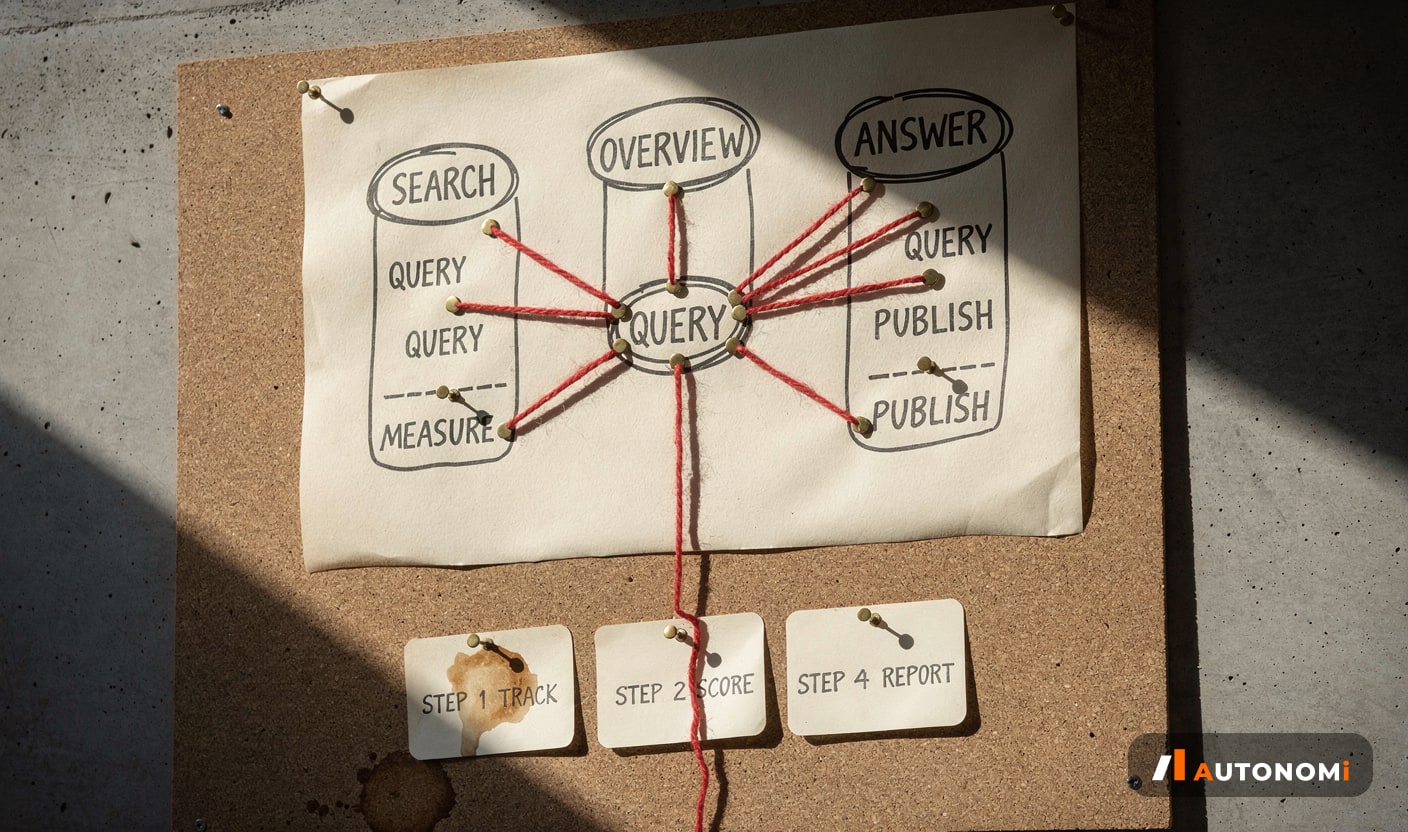
The automotive industry has found a new consensus position, and like most consensus positions, it is correct as far as it goes and stops precisely where the argument gets uncomfortable. The position is this: cheap AI costs you more than expensive AI, because cheap AI fails quietly and still requires a human to catch the failure. That is true. It is also not the question that moves the P&L.
The question that moves the P&L is whether any AI that requires a human to brief it, review it, approve it, and manually carry its output to a platform is structurally different from an agency billing for the same three steps under a different name. The answer is: not very.
The distinction that actually matters is not cheap versus expensive. It is supervised versus autonomous. And almost no one in the webinar circuit is willing to say that out loud, because most of the platforms being sold to dealers today land firmly on the supervised side of that line.
What Did the Webinar Actually Argue?
Earlier this month, CBT News covered a webinar from an AI vendor making the case that low-cost AI solutions carry hidden costs that wipe out the apparent savings. The core argument is worth taking seriously.
“the cheapest AI a dealership can buy is usually the most expensive one it will own” — CBT News | #1 Source for Automotive News & Dealership Intelligence
That framing is accurate. A tool that generates plausible-sounding ad copy but still needs a marketing coordinator to verify it, rewrite the payment disclosures, screenshot it, log into the platform, and upload it manually has not replaced a process. It has added a step. The coordinator is now briefing the AI and then doing most of the original work on top of that. Hidden costs are real.
But notice what the argument does not say. It does not say that expensive AI eliminates the human in the loop. It says expensive AI produces better output for the human to carry forward. That is a meaningful improvement. It is not a structural change to who does the work.
Why Is the Cheap-vs-Expensive Frame the Wrong Frame?
The cheap-versus-expensive argument assumes the baseline is fixed: a human owns the decisions, and AI quality determines how much time the human wastes correcting the AI's errors. On that assumption, spending more on AI is obviously correct. Better AI, fewer corrections, net time saved.

The frame breaks down when you ask a different question: what if the human does not need to own the decisions at all?
Supervised AI, regardless of its quality, requires a human to remain in the operational loop: briefing, reviewing, approving, and deploying. The cost of that loop is not just the time it consumes. It is the latency it introduces, the inconsistency it creates when the human has a busy week, and the organizational dependency it builds on a role that turns over at a rate automotive retail knows all too well.
When a marketing coordinator leaves, the supervised AI workflow pauses. The institutional knowledge of which prompts work, which outputs to distrust, which platform quirks to work around: it walks out with them. The AI platform continues to exist; the operational system that made it useful does not.
That is not a cheap-AI problem. It is a supervised-AI problem. And paying more for a better supervised AI does not cure it.
What Makes Supervised AI Structurally Similar to an Agency?
Consider the three steps that define agency billing in automotive digital marketing: strategy and briefing, execution and production, and platform management. An agency charges for all three. A dealer who replaces their agency with a supervised AI platform has eliminated none of them.

The briefing still happens: someone at the store tells the AI what this month's focus is, which models to push, what the current offer is. The production still happens: the AI generates options, a human selects and refines. The platform management still happens: someone logs in, uploads, monitors, adjusts. What supervised AI replaces is the agency's production staff, not the agency's operational structure.
This is why so many dealers who switch from an agency to an AI tool find that their internal workload goes up, not down, in the first quarter. The agency, whatever its faults, owned the operational burden. The supervised AI redistributes it to whoever is closest to the keyboard.
The billing structure changes. The labor structure does not. And for a dealer group managing five, ten, or fifteen rooftops, the labor structure is the number that determines whether the marketing operation scales or stalls at the next acquisition.
As we have argued before, getting from automation to autonomy is not a software upgrade: it is a different theory of who does the work. Automation tools improve the speed and quality of human-executed tasks. Autonomous systems replace the human execution layer entirely. The industry keeps selling the first thing while calling it the second thing, and dealers keep buying without asking which one they are actually getting.
What Does Autonomous AI Actually Change at a Dealership?
Autonomous AI in automotive marketing means the daily operational decisions, the ones that currently require a human to show up and make them, run without that human in the loop on each iteration.
The inventory changes overnight: a dozen units arrive, a few sell, prices move. AEGIS runs a daily inventory-diff rebuild that rescans live inventory, diffs it VIN by VIN against what is currently in the ad accounts, and rebuilds only the affected ad groups in place across every paid channel it manages, without a briefing from the dealer and without a coordinator manually uploading updated copy.✓ Sep 9 The dealer set the budget ceiling and their locked allocations at setup. After that, the daily operational execution runs on its own.
OEM offers are structured and deterministic. AEGIS reads offer terms field by field from the manufacturer's own structured offer feed, so the same published program yields the same numbers on every capture, and a re-scrape reports a change only when the manufacturer actually changed something.✓ Sep 9 The ad copy reflects the current offer because the system reads the current offer directly, not because a coordinator checked the OEM website this morning.
AEGIS makes a single daily allocation decision across every paid sub-channel it manages, as one reasoning pass rather than per-channel piecemeal calls, rebalancing the budget matrix against live inventory, OEM incentive strength, and market conditions.✓ Sep 9 The dealer's locked allocations are held exactly as set; everything else is solved continuously. No briefing is required for the daily pass because the dealer's instructions are already encoded in the ceiling and the locks, not in a morning conversation with a coordinator who might be on vacation.
The compliance review runs on every piece of copy before it reaches a platform. AEGIS routes every ad through a three-stage compliance triad: strategist, composer, and verifier, each an independent review of the copy and the landing-page assertion before spend is approved.✓ Sep 9 The dealer does not review compliance. The AI does, before the dealer ever sees the output.
That is what autonomous looks like in practice. Not AI that produces better drafts for a human to judge. AI that makes the operational decisions inside a set of parameters the human defined once, then updates as their strategy changes.
How Do You Tell the Difference Between Supervised and Autonomous AI in Practice?
The test is simple: what happens on a Tuesday when the marketing coordinator calls in sick?
On a supervised AI platform, the answer is: the campaigns run unchanged from Monday, any new arrivals on the lot are not reflected in the ads, any expired offer is still running, and the budget has not been rebalanced to reflect whatever shifted overnight. The AI is waiting to be told what to do.
On an autonomous platform, Tuesday looks the same as Monday from the platform's perspective. The inventory diff ran. The offers were checked. The allocation pass executed. The copy that needed updating was updated. No one had to be in the office for any of it.
A second test: the architecture question that most AI vendor conversations avoid is who owns the accounts and the data when the vendor relationship ends. But a prior question, equally diagnostic, is: who owns the decisions while the relationship is active? If the answer is a human at your store, you have supervised AI. If the answer is the system, operating inside parameters you set, you have something structurally different.
Most platforms being sold to dealers today cannot pass the Tuesday test. They are supervised tools with autonomous branding. The price tag is often the tell: a tool that requires a human operator on your end to function is a tool, and it is priced like one. A platform that eliminates the operator role on your end is priced against the cost of the role it is replacing, which is considerably higher.
The AI that actually frees a GM's time is not in the cabin: it is running the ad account at midnight, making the decisions that would otherwise wait for Monday morning. The GM who still has to approve every allocation shift before it executes has not been freed. They have been given a faster typewriter.
How AUTONOMi Approaches Autonomous Execution
AUTONOMi is built on the premise that the supervised model is the wrong model, and that the dealer's operational question is not which AI to brief but whether they can eliminate the briefing requirement from the daily workflow.
The dealer sets their budget ceiling and their locked allocations once, in their own Budget Studio surface. From that point, AEGIS optimizes freely across every unlocked sub-channel without requiring per-decision approval, while holding locked allocations as hard constraints the system cannot move beyond a narrow governance band.✓ Sep 9 The dealer's strategic intent is encoded in those parameters. The daily execution is AEGIS's responsibility, not the coordinator's.
For dealers who want to manage specific channels themselves, or who run an agency on certain platforms, AEGIS's per-channel opt-out is exact: when a channel is opted out, AEGIS launches, touches, analyzes, rebalances, and counts nothing on it, enforced at the run router, the governance layer, the budget matrix, and the spend ceiling.✓ Sep 9 On opt-out, AEGIS pauses its own campaigns on that channel and leaves dealer-owned campaigns entirely untouched. The channel's budget redistributes to the channels AEGIS still manages. This is not a reduced-capability mode. It is a hard boundary the platform enforces universally, so the dealer can run a hybrid model without worrying about AEGIS interfering in the channels they kept.
Every allocation decision, every ad-copy change, and every compliance finding is hash-chained in a dealer audit trail through AXIOM, AUTONOMi's governance engine, so the dealer can see exactly what was moved and why without having approved each action individually.✓ Sep 9 The audit trail is not a summary produced after the fact. It is a cryptographically linked record of each decision at the moment it was made.
The daily inventory-diff rebuild cascade rescans each dealer's live inventory, diffs it VIN by VIN, and rebuilds only the affected ad groups in place across Google Search, Google PMax, Google Demand Gen, Microsoft, and TikTok, carrying forward unchanged copy and reconciling live campaigns rather than recreating them from scratch.✓ Sep 9 The same rebuild fires when a fresh OEM offer batch publishes. The coordinator who used to update ad copy when inventory changed is not doing a faster version of that job. That job has been eliminated from the human workflow.
The prompt is the wrong unit for an automotive marketing operation. What turns a language model into an operational system is the architecture around it: the inventory feed, the offer matching, the compliance review, the budget governance, the audit trail. AUTONOMi is that architecture, not a better prompt interface layered on top of a tool the dealer still has to run.
The Question Every Dealer Group Should Be Asking Before the Next Webinar
The webinar circuit will keep producing variations of the cheap-versus-expensive argument because it is a safe argument. It tells dealers to spend more, not to rethink who does the work. The vendors sponsoring webinars are, not coincidentally, selling supervised tools that require dealers to keep someone in the seat to operate them. The argument serves the product being sold.
The more disruptive question is: if you hired an agency to run your campaigns, and then replaced the agency with an AI that still requires someone at your store to brief it every morning and approve every change, have you changed your cost structure in any meaningful way? The answer is: probably not enough to matter at scale.
The dealer groups that will separate from the pack over the next three years are not the ones who bought better supervised AI. They are the ones who stopped treating the briefing step, the approval step, and the upload step as permanent features of the marketing workflow and found a platform where those steps belong to the machine. If your current AI tool still requires a human to carry the output to the platform, the question worth asking is what exactly you are paying for. See how AUTONOMi runs the daily execution on your live stack before you answer it.
Source: CBT News | #1 Source for Automotive News & Dealership Intelligence
The industry conversation is catching up to what autonomous-AI proponents have argued for years. In a September 2025 CBT News webinar produced in partnership with Podium, Jordan Parker put it plainly: "the cheapest AI a dealership can buy is usually the most expensive one it will own." The framing is accurate as far as it goes — low-cost, supervised AI tools layer in human review cycles, prompt-engineering overhead, and vendor-managed guardrails that collectively rebuild, at a monthly subscription price, the very agency dependency the tool was supposed to eliminate. The more inconvenient truth, though, is that even well-priced supervised AI shares that structural flaw. Cost is not the real variable. Autonomy is.