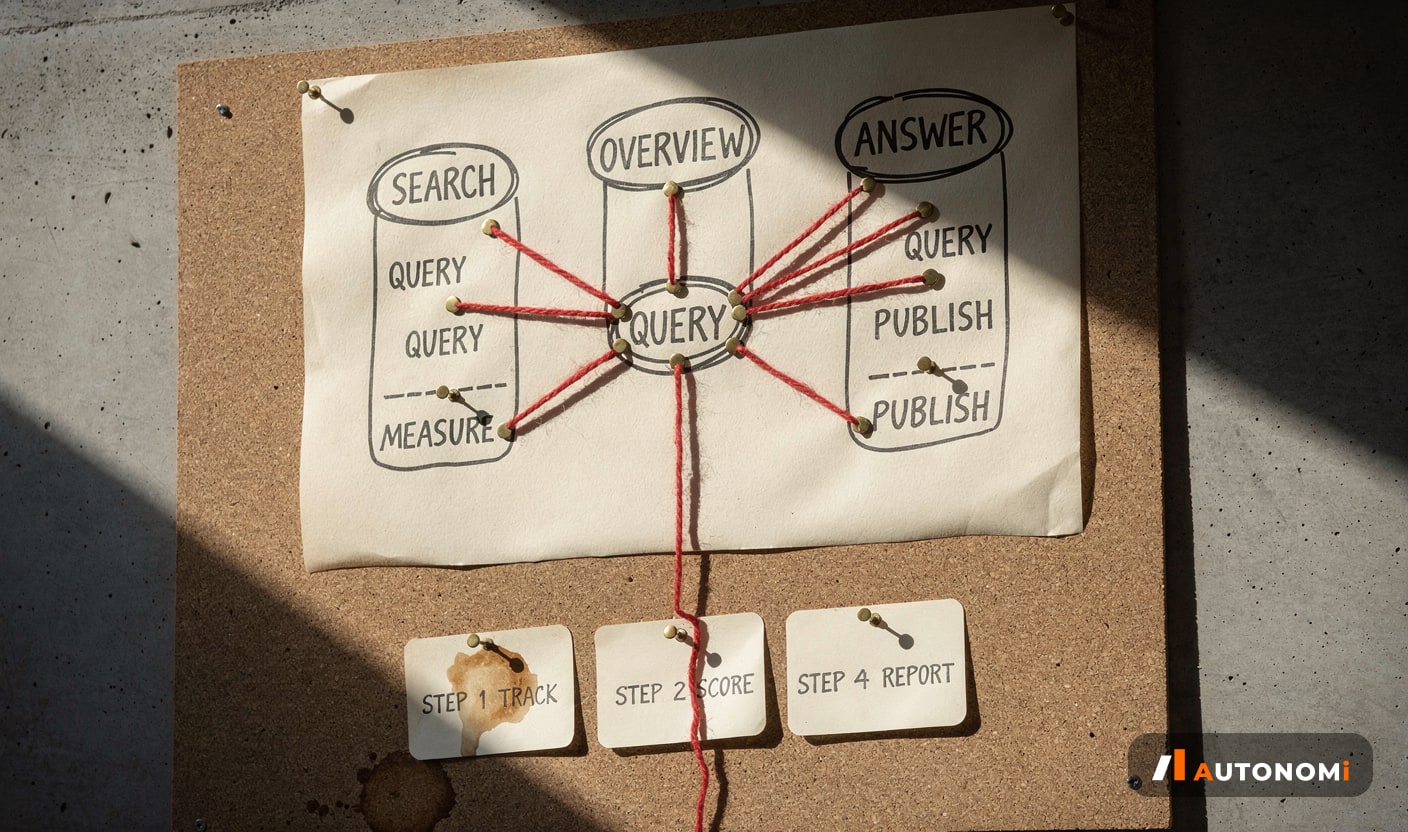
Across 15–20 Southwest dealerships over a single 30-day window, AEGIS managed roughly $150,000 in paid media spend and delivered more than 5,000 conversions at a cost per lead between $20 and $30. Not projected. Not modeled. Measured, from real campaigns, running live across Google Search, Google Performance Max, Meta, and Connected TV.
The question this data forces is not whether AI can manage dealer ad spend. It's why the industry is still paying agencies to do it manually.
The Baseline Problem With How Dealers Buy Media
Most dealer-group media buying is siloed by design. A Google agency manages search. A separate team runs Meta. A broadcast vendor handles TV. A DSP sits in the middle running programmatic. Each vendor optimizes for their own channel's metrics, reports in their own format, and has no visibility — and no incentive — to shift budget toward the channel that's actually working this week.
The result is a portfolio that underperforms the sum of its parts. Budget doesn't flow to the highest-converting channel in real time. OEM incentive windows open and close without the creative or spend reacting. A vehicle aging past 60 days on the lot gets the same campaign architecture as a freshly stocked model with factory cash on the hood.
This is not a competence problem. It is a structural problem. The agency model was built to sell channel-specific execution, not cross-channel intelligence. The two are incompatible.
What the Southwest Cohort Actually Spent
The 30-day window covered a regional cohort of 15–20 Southwest dealerships spanning multiple franchises and market sizes. Total managed spend: approximately $150,000. Total conversions recorded across ad-platform-reported conversion events: more than 5,000. Blended cost per lead: between $20 and $30.

Google Search anchored roughly 40% of the total budget — the highest single-channel allocation. This is intentional. Intent-based search traffic converts at a different rate than discovery-layer inventory. A dealer running conquest audiences on Meta needs a complementary Search presence to close the loop when that same buyer types a model name into Google three days later.
Connected TV accounted for approximately 15% of spend. That number is worth pausing on. CTV is not typically treated as a performance channel by dealer media buyers — it gets bucketed with brand spend, measured by impressions, and evaluated quarterly at best. In this cohort it functioned as a retargeting and conquest layer with measurable downstream conversion contribution. The channel is being underpriced by the market because most dealer advertisers still don't know how to buy it.
The remainder split across Google Performance Max, Meta, and supporting channels — each allocated based on where the conversion signal was strongest for that dealer's specific inventory mix and market conditions during that window.
Why the CPL Is What It Is
A $20–$30 blended CPL across a multi-franchise Southwest cohort does not happen by accident. Three things produce it.

First: VIN-level campaign construction. Every vehicle in a dealer's inventory is treated as a distinct advertising entity. A 2025 import crossover with a current OEM cash incentive, 22 days on the lot, and documented website traffic gets a different campaign posture than a domestic truck at 75 days with no factory support. AEGIS treats each VIN as having its own optimization trajectory — its own urgency, its own creative angle, its own cross-channel budget allocation. Flattening all of that into one campaign per model-tier, as most agencies do, throws away the signal.
Second: OEM incentive matching. When a manufacturer posts a new APR offer or a lease support program, that offer is scraped and matched against every VIN in the dealer's current inventory that qualifies. The campaign copy and creative update to reflect that incentive before the typical agency's production workflow has finished its weekly review call. Incentive windows average days to weeks. Manual operations capture a fraction of that window. Automated matching captures all of it.
Third: autonomous budget rebalancing. When conversion rates shift — and they do, daily, by channel and by market — the budget follows. Not at the end of the week when someone checks a dashboard. Not at the monthly agency review. Continuously, within the spend parameters the dealer set. The 40/15 split between Search and CTV in this cohort is not a fixed allocation; it reflects where the signal was strongest during that 30-day window for that group of dealerships in that market.
What an Agency Running the Same Budget Produces
This is the uncomfortable comparison. Take the same $150,000 and route it through a conventional agency structure. What changes?
First, a portion of it doesn't reach consumers. As documented in the agency fee structure, management fees, margin on media buys, and platform markup can consume a significant share before any impression is served. The $150,000 entering the system is not the $150,000 reaching the auction.
Second, the campaign architecture is static. Agencies build campaigns in planning sprints — typically monthly or quarterly. The VIN that arrived on the lot last Tuesday does not have a campaign until the next build cycle. The OEM incentive that posted on Monday does not appear in creative until someone notices it, escalates it, and a designer updates the assets. Meanwhile, the Google auction is running.
Third, optimization is human-gated. A skilled media buyer at a dealer-focused agency manages dozens of accounts simultaneously. Their attention is rationed. The decisions that get made are the ones loud enough to surface — a flagged campaign, a budget that's pacing off, a GM who called. The quiet decisions — which VINs to lean into, whether CTV is outperforming Meta this week, whether to shift $8,000 from a saturated ad group into a higher-converting market — don't get made because there is no bandwidth.
The result is a CPL that is structurally higher than it needs to be, with a reporting layer designed to make the gap invisible. The monthly PDF that lands in a GM's inbox is built to show the metrics the agency controls, not the ones that reveal what better management would have produced.
The CTV Question
Connected TV at 15% of a dealer's paid media budget is not an obvious call for most operators. The conventional wisdom is that CTV belongs to the brand campaign and the performance budget belongs to search and social. That framing made sense when CTV measurement was limited to impressions and reach curves. It makes less sense now.
In this cohort, CTV ran as part of a coordinated channel strategy — not as a standalone brand play. The same audience logic that informs a Search campaign's targeting informed the CTV placements. A household that has visited a VDP, interacted with a Meta ad, and searched a competitive model name is a different CTV target than a broad demographic bucket. When those signals are unified under a single campaign intelligence layer, CTV stops functioning as a brand expense and starts functioning as a conversion-stage channel.
Most dealer-group media plans don't reach this level of coordination because the teams running each channel are different teams with different briefs. CTV stays siloed. Its contribution stays invisible. And the budget allocation never evolves past whatever split the agency proposed in the original plan.
How AUTONOMi Manages $150,000 in Dealer Ad Spend
The Southwest cohort results described above ran on AEGIS. Here is what that means operationally.
AEGIS constructs campaigns at the individual-vehicle level. For every VIN in a dealer's active inventory, AEGIS analyzes inventory age, current OEM offers matching that vehicle, and cross-channel performance signals before building the campaign structure. A VIN approaching lot-age thresholds gets a different posture than a fresh unit with factory support. This happens automatically, across every vehicle in the inventory, without a production queue.
The OEM offer matching runs against manufacturer incentive data scraped from public OEM sources — covering the major US franchises — and matched against the dealer's current inventory. When an incentive qualifies a vehicle, the campaign copy reflects that offer. The matching is not a weekly process. It runs continuously.
The budget-balancing engine reallocates spend across Google Search, Google Performance Max, Meta, and the Connected TV add-on module based on live conversion signal. The parameters are set by the dealer — total budget, channel floors and ceilings, spend pacing — and AEGIS operates within them. The dealer does not need to review channel allocation daily. The system does it.
Before any campaign goes live, the compliance triad — a three-stage review sequence of strategist, composer, and verifier — checks every ad against OEM brand guidelines and platform policy. Nothing spends until it clears. AXIOM, the policy engine that governs every AEGIS action, enforces spend caps per dealer and gates every action against a defined risk classification. All ad accounts remain dealer-owned. AEGIS operates with delegated access; the dealer can revoke it at any time.
This is not an agency replacement that requires the dealer to replace one management relationship with another. It is the infrastructure layer that makes the agency relationship structurally unnecessary for campaign execution — the same way platform AI has already automated the execution layer agencies were charging to manage.
What Changes Next
The Southwest cohort is one 30-day snapshot. The structural dynamic it illustrates does not become less true as the network grows — it becomes more true. More conversion signal across more VINs across more markets makes the budget-rebalancing engine more accurate. OEM incentive matching covers more franchises. CTV attribution gets sharper as the audience graph deepens.
The dealers who are still operating on monthly agency review cycles are not standing still. They are falling behind by the width of a month's worth of optimization decisions their campaigns are not making. A $150,000 budget managed autonomously for 12 months is not the same as that budget managed manually for 12 months. The gap compounds.
The dealers who figure this out first will have CPL floors their competitors cannot reach through manual operations. The agencies managing those competitors' accounts will produce the same reports they always have — just with a larger denominator. If you want to see what your own group's spend would look like running through this infrastructure, model your dealer-group's spend with the AUTONOMi budget tool and compare it against your current blended CPL.
Every ad account stays in the dealer's name. AEGIS connects via OAuth 2.0 with PKCE and platform-native APIs — never shared logins — and the accounts, pixels, and data infrastructure it provisions belong to the dealer, not to AUTONOMi. As AEGIS's own comparison of agency vs. AEGIS account ownership puts it, where an agency model has the agency controlling the accounts, the AEGIS model has the dealer owning everything outright.