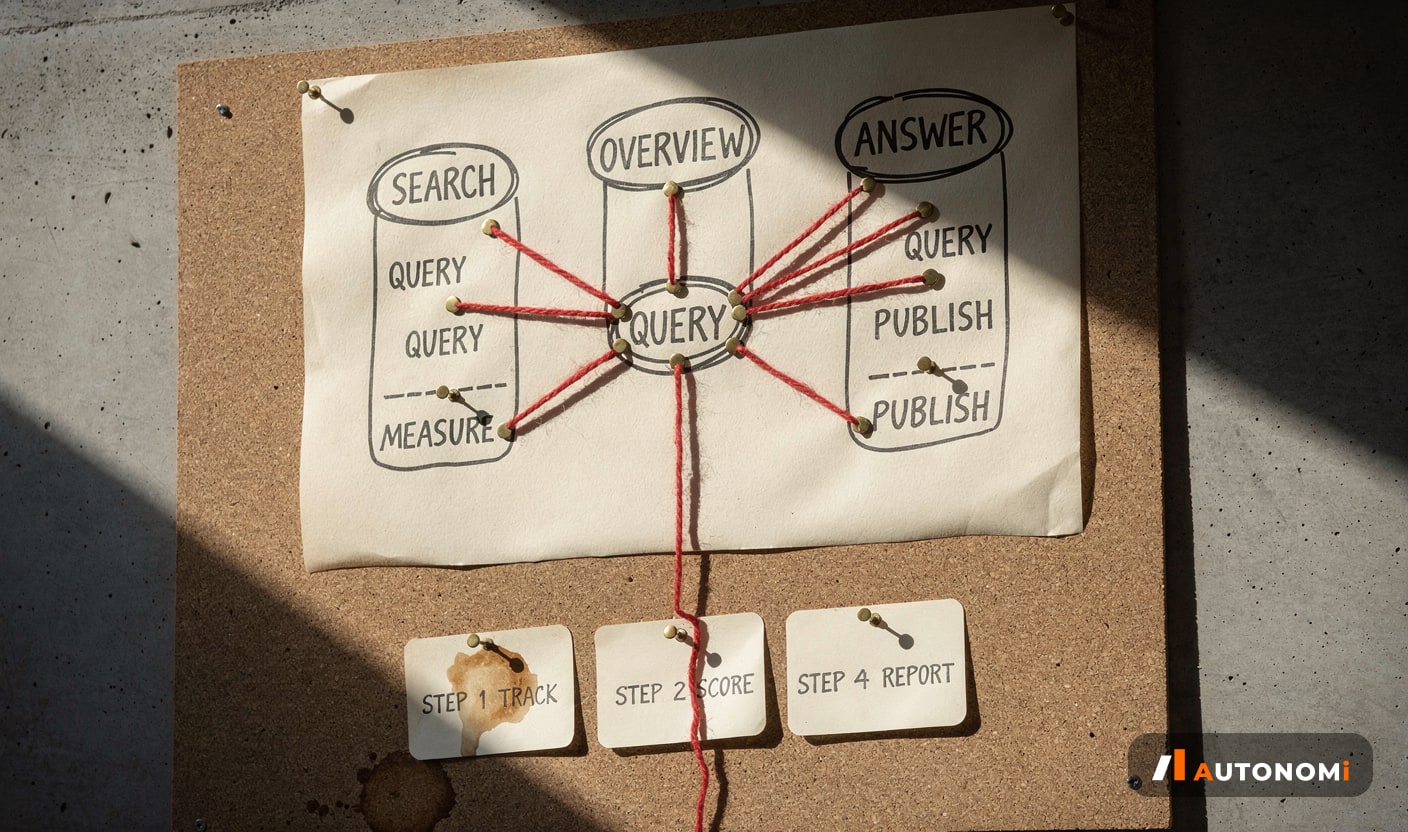
The debate over where AI belongs in a dealership is being held at the wrong altitude. GMs argue about whether a machine should ever talk to a shopper, and the argument never ends because it is a question about values. The operational version has an answer: AI and people are a routing problem, and the routing is decided at the first reply.
Every lead that fires a form gets a first response from something. Either that something knows when to stop talking and who to pass the conversation to, or it does not. Everything a dealer worries about, the cold bot, the stalled lead, the angry customer who asked to be left alone, is a failure of that decision.
Why Is This a Routing Question and Not a Philosophy Question?
Philosophy asks whether a machine should be allowed to sell. Routing asks what each party is good at and where the line sits. A shopper who wants to know if a unit is still on the lot, whether a store is open Sunday, or what time works for a visit does not need a person. A shopper who is deciding whether to trust the store with a five-figure decision does.
Nobody disputes that the second kind of conversation belongs to a human. The dispute is about the boundary, and boundaries are engineering. They can be specified, logged and checked. Opinions about AI cannot.
That is why the right unit of analysis is not the assistant. It is the moment the assistant stops.
What Does the Trade Press Say About Where AI Helps?
CBT News published a piece on October 12 on where AI helps and where dealers still need the human touch.✓ Oct 13 Its framing of what automation adds to a sale is worth reading closely:
"Customers who hear nothing often assume the store is trying to take advantage of them." — CBT News | #1 Source for Automotive News & Dealership Intelligence
Read that as a statement about silence, not about technology. The damage in a dealership is rarely done by a bad message. It is done by no message, by the gap between the form submit and the first sign that a human being exists on the other end.
Which means the first reply is not a courtesy. It is the trust signal, and whoever sends it, the rest of the relationship inherits its quality. A fast, accurate, honest first reply buys the BDC time. A slow one spends the shopper's patience before anyone qualified has spoken.
Where Should the First Reply End and the Human Begin?
The line should sit where the shopper's intent changes from information to commitment. Availability, hours, directions, what a model offers, which unit matches a stated need: these are retrieval problems, and a system tied to live inventory answers them better than a rushed salesperson at 9 p.m.
Price negotiation, trade valuation, credit, a complaint, a request to speak with someone, a shopper who says they are coming in today: these are the human's. They carry judgment, accountability and relationship, and they carry regulatory weight in a way a vehicle-availability answer does not.
The mistake dealers make is drawing this line by topic in a policy document and then trusting the tool to follow it. A line that is not recorded at the moment of crossing is not a line. It is a hope.
This is the same failure we described in the first five minutes after the lead form fires: speed matters, but speed without a clean transfer just moves the dropped lead earlier in the funnel.
What Should a GM Actually Audit?
Not the bot. Bots are demos, and every demo looks fine. Audit the hand-off record, the artifact produced when a conversation moves from the machine to a person.

A good hand-off record answers five questions without anyone having to call anyone. What did the shopper say, in their own words? What did the system say back? Why did intent cross the line? Who received it, and when? What has the shopper asked not to receive?
The words matter most. A BDC rep who opens a hand-off and finds a summary written by the system is already working from an interpretation. A rep who finds the shopper's own sentences, unedited, can pick up the thread as if they had been in the room. This is the standard the lead path should be held to: the customer's reply carried verbatim, with any machine read labeled as a read.
It is also the standard already applied elsewhere in our own stack.
It is also the standard already applied elsewhere in our own stack. When a PRISM household replies with interest, a question or a request to be called or texted, AUTONOMi emails the dealer's lead-routing inbox an ADF/XML lead for the dealer's CRM to ingest. The lead carries the customer's reply verbatim, set apart from AUTONOMi's own read of what they want. When the household has been matched to visits on the dealer's site, it also carries a short site-activity summary: days on the site, sessions, page views and the models browsed. A reply that says stop is treated as an opt-out, not a lead. A hand-off that cannot show you the shopper's words is a hand-off you cannot audit.
A hand-off that cannot show you the shopper's words is a hand-off you cannot audit.Why Does the Opt-Out Belong in the Same Record?
Because the cheapest way to lose a customer, and the most expensive way to attract a regulator, is to keep contacting someone who said stop. Most dealer follow-up runs in several tools, and each keeps its own list. A shopper who unsubscribes from email and keeps getting texts is the predictable product of that design.
The state clocks make it worse. Many drip tools schedule against a single federal window and ignore that several states are stricter, as we covered in the Texas texting statute. The hand-off record should show not only that a message was permitted but that the shopper's standing was checked before it left.
An opt-out that is honored in one channel and ignored in another is not an opt-out. It is a data-entry error with legal consequences.
What Happens When the Human Is the Bottleneck?
The honest objection is that handing off to a BDC only helps if the BDC picks up. A stretched team turns a well-routed lead into a stale one, which is why share moves on conversion of demand already in hand, the point behind the lead answered first. The hand-off record is also the evidence for this. If it shows leads crossing the line and waiting, the problem is staffing, and no ad budget fixes it.

The same record answers the overnight case. What the system does at midnight when the BDC is closed is only acceptable if what it does is acknowledge, answer from live inventory, and queue the human, never improvise past the line.
A GM who audits time-to-human-pickup on handed-off conversations learns more about store performance in a morning than a quarter of chatbot analytics would show.
The AUTONOMi Approach to the Hand-Off
LANE is AUTONOMi's AI sales conversation line: per-dealer follow-up and chat anchored to the dealer's live inventory, with a daily follow-up sweep that fires email and SMS sequences to inbound leads.✓ Oct 13 LANE does not replace the dealer's BDC; it hands off to the BDC when intent crosses a threshold.✓ Oct 13 It handles inbound leads only. It is not an outbound cold-calling tool.
One shared do-not-contact ledger is written by every opt-out surface, including unsubscribe clicks, spam complaints, hard bounces, SMS STOP and privacy requests, and it is checked before every LANE email and SMS leaves.✓ Oct 13 An unreadable ledger holds the send rather than risking it.✓ Oct 13 SMS quiet hours are state-aware for Texas, Florida, Oklahoma and Washington, with the federal TCPA window everywhere else.✓ Oct 13 The claim is the named states, not every state law.
Leads from an ATLAS landing page appear as LANE conversations when the store has LANE, carrying what the shopper asked for and which offers the page was built for. AXIOM hash-chains every dealer-impacting decision into an audit trail the dealer can read.✓ Oct 13 That is the discipline this article argues for: the transfer is a recorded event, not a feeling.
Where Does This Go Next?
The dealers who win this will not be the ones with the most impressive assistant. They will be the ones whose GM can open a hand-off and see the shopper's words, the reason intent crossed the line, who picked it up, and whether anyone had asked to be left alone. The philosophy debate will keep running at conferences. The stores that settle it in a record will simply answer faster and more honestly than the stores that did not.
If you want that routing drawn and auditable in your own store, sign up and connect your inbound lead flow through AUTONOMi and start from the hand-off record. Source: CBT News | #1 Source for Automotive News & Dealership Intelligence