GM CEO Mary Barra told CNBC's Mad Money that the company's eyes-off, hands-off driving goal is on track for 2028. By Friday afternoon, a few hundred dealer blogs will have turned that sentence into a post titled something like "The Future of Driving Is Almost Here." Almost none of them will carry a source, a date, or a way for a reader to check it.
That is the problem. A timeline spoken by an executive on a business show is not a fact about your inventory, your showroom or your cars. It is a claim about the future made by one person, and the only honest way to repeat it is to say who said it, where, when, and what exactly was said.
What Did GM's CEO Actually Say About Eyes-Off Driving?
Start with the words, because the words are narrower than the headlines that will follow them. CBT News reported the exchange on October 16, 2026, and the quote worth keeping is this one.
"“They’re making so much progress on our goal to have eyes off, hands off in the ’28 time frame,” Barra told CNBC.", CBT News | #1 Source for Automotive News & Dealership Intelligence
Read it as an editor would. It says "goal." It says "time frame." It says progress is being made. It does not say a specific vehicle will ship in a specific model year, at a specific price, in a specific set of states, or on a specific road type.
A dealer blog that turns "goal" into "GM will deliver" has changed the claim. A dealer blog that turns "'28 time frame" into "2028 Silverado" has invented one. Both edits are small, both are common, and both are the kind of thing a shopper's lawyer, a competitor, or an AI answer engine will eventually notice.
Why Is a Future-Tech Timeline a Liability for a Dealer Blog?
Because it is the one kind of content where the writer has the least ability to know and the reader has the most ability to check. Pricing claims can be matched against a window sticker. A timeline can only be matched against a quote, and the quote is public.
Shoppers now ask machines before they ask people. When someone types a question about when self-driving arrives from a major automaker, the answer engine pulls from pages it can attribute and date. A page that says "on track for 2028" with no source competes badly against a page that quotes the speaker, names the outlet, and states when the claim was last checked.
There is also a trust cost that has nothing to do with search. A dealer who tells a customer that hands-free, eyes-free driving is coming in 2028 has made a promise adjacent to a purchase decision. If the date slips, that customer remembers who told them. If the date was never the dealer's to give, the blog should never have given it in the dealer's voice.
The same discipline already applies to price. The advertised number is judged before anyone reads the rest of the ad, which is the argument in the piece on the FTC and all-in advertised pricing. Future-tech dates deserve the same suspicion for a different reason: nobody on the dealer's side can verify them, so the only defensible position is attribution.
How Does an Unsourced Executive Timeline Spread Through Dealer Content?
It spreads the way every unsourced claim spreads: one paraphrase at a time. A trade outlet reports the quote. A content vendor summarizes the report. A dealer blog summarizes the summary. A social caption summarizes the blog. By the fourth hop, "goal" has become "promise" and the speaker has become "GM."

The agency model rewards this. A monthly content retainer is paid by the post, not by the claim. The writer's incentive is to publish something timely, and the fastest way to be timely is to restate the headline in fresh words. Nobody in that chain is paid to go back to the source and read the sentence in full.
That makes the agency blog that repeats an executive's timeline unsourced the clear loser of this news cycle. It is not losing because it is wrong. It is losing because it cannot show it is right, and in a search environment that rewards attributable, dated, extractable pages, "trust us" is no longer a ranking signal.
The same pattern shows up wherever a manufacturer or an executive states something and a dealer repeats it. When programs shift, copy keeps citing the old numbers, which is the failure described in the post on OEM program copy running stale figures. A timeline is the same failure with a longer fuse.
What Does a Checkable Claim Look Like?
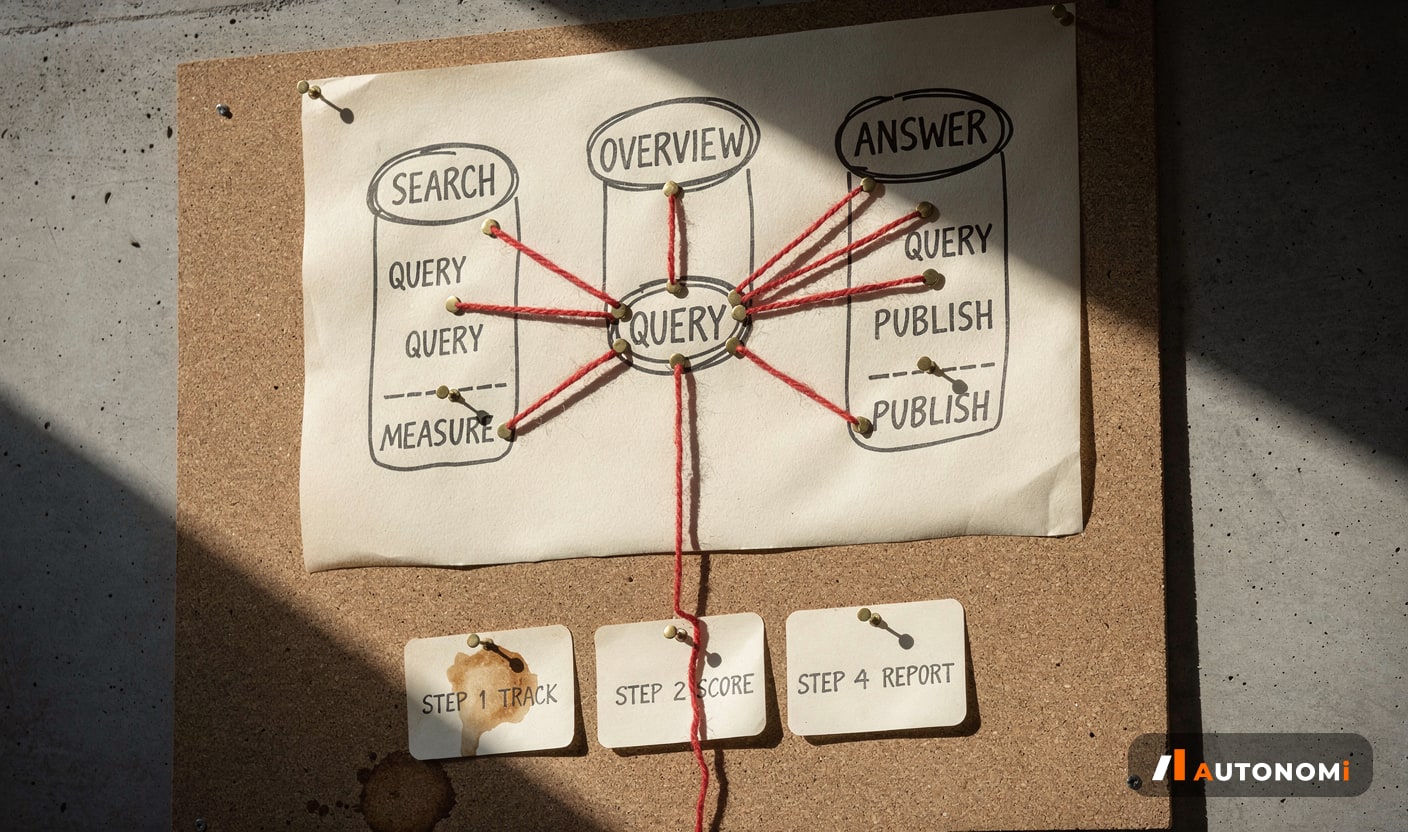
A checkable claim has five parts: a subject, a predicate, an object, a verbatim quote from the source, and a date it was last confirmed. Take the Barra statement. The subject is GM's chief executive. The predicate is that she said progress is being made toward a goal. The object is eyes-off, hands-off driving in the 2028 time frame. The quote is the sentence above, word for word. The date is the day someone last confirmed the source still says it.
Notice what that structure refuses to do. It does not let a writer assert that GM "will launch" anything. It does not let a writer add a model name, a price, a trim or a state. If the source did not say it, the claim row has nowhere to put it.
It also makes the claim perishable in a useful way. An executive timeline can move. A claim carrying a last-verified date and an expiry forces someone, or something, to look again before the sentence goes stale on the page. A blog without that mechanism keeps repeating 2028 long after the company has said something else.
None of this is exotic. It is how a competent trade desk already works when it covers another outlet's reporting: name the publisher, quote the line, link the source. What is new is applying it to every assertion in the article, automatically, and making it machine-readable so that answer engines can read the attribution the same way a person would.
Why Do AI Answer Engines Reward Dated, Quoted Claims?
Because an answer engine has the same problem a careful editor has. It must decide which page to cite when it cannot check anything itself. The cheapest signal is a page that shows its work: the source named, the quote present, the date visible, the structure clean enough to lift a single sentence without losing its meaning.
A vague future-tech post gives the engine nothing to lift. "Self-driving cars are coming soon" cannot be attributed to anyone. "GM's CEO said on CNBC that eyes-off driving is on track for 2028, according to CBT News on October 16, 2026" can be attributed to three things at once, and it ages honestly because the date is in the sentence.
This is also why the question matters more than the keyword. Shoppers do not search for a topic; they ask something specific, such as when a given automaker will offer hands-off, eyes-off driving. The page that answers that question with a quote, a speaker and a date is the page that gets cited. The page that answers it with enthusiasm is the page that gets skipped.
The compliance world is already moving the same direction on a different subject. When a regulator or a plaintiff tests a label, the label has to be true and provable, as in the case of a deal label treated as a pricing claim. Content about the future is held to a softer standard today. That will not last, and the blog that already carries its sources will not have to retrofit.
How AUTONOMi Solves This
Every article ECHO produces ships with a claim graph: each factual assertion becomes a structured claim row with a subject, predicate, object, a verbatim supporting quote from an external source, a verifier, a last-verified date and an expiry. That applies to dealer blogs and to AUTONOMi's own blog, so the engine writing this post is the one that holds it to the standard it describes.
On dealer blogs, claims are extracted and verified before publish, and an objection is answered by fixing the article: AEGIS rewrites the offending paragraph in place, and if that cannot run, the anchored assertion is removed outright. The honest shape of that claim is that unverifiable claims are corrected or removed before the article ships, not that every statement is guaranteed true. A nightly refresh job re-verifies expiring claims, and when a source contradicts a previously verified claim, the paragraph is redrafted and the contradiction is logged.
The claim graph is rendered into schema.org ClaimReview JSON-LD alongside the article, and nightly citation probes record when an ECHO article is cited by an AI answer engine. ECHO is available as its own plan per rooftop, with no advertising plan underneath, or as a module on top of one. For a dealer, the practical result is that a post about a future-tech timeline carries the speaker, the quote and the date, instead of a paraphrase nobody can trace.
Who Should Be Writing the Future-Tech Post, and Who Should Not?
The dealer who wants to be useful on this topic has a narrow, safe lane. Report what was said, by whom, and when. Link the source. Explain what it does and does not mean for a shopper today, in terms of the cars actually on the lot. Leave the prediction to the people who have to deliver it.

The dealer who wants to be exciting has a wide, dangerous one. Every adjective added to the executive's sentence is a claim the dealer now owns. Every date the dealer adds is a promise the dealer can be held to by a customer, a regulator, or an engine that checks.
The same discipline shows up in how a store handles any conversation about something it cannot deliver yet. An ad for a car not on the lot has to say so, as the post on preorders and unlisted units argues. A future-tech timeline is the same situation, stretched across years: the product is not here, and the content has to be honest about that.
Where Does This Go From Here?
Executive timelines will keep arriving, and more of them will arrive in the middle of a news cycle that dealer blogs feel pressure to join. The stores that publish fast will be tempted to publish loose. The stores that publish with a source, a quote and a date will be the ones answer engines keep returning to, because the page shows its work every time.
The decision in front of a dealer group is simple: whether your content can be checked as quickly as it can be written. If you want a blog where every date and quote carries its source and a last-verified stamp, you can sign up and put ECHO's claim graph behind every post you publish.
If you are republishing an executive's timeline today, check it against the speaker's own words first, and sign up if you want that check built into every article. Source: CBT News | #1 Source for Automotive News & Dealership Intelligence