How to get your dealership recommended by ChatGPT.
No one can guarantee that ChatGPT, Perplexity or Google AI Overviews will name your store — but you can make your dealership the easiest source for them to cite. Answer the questions shoppers ask, publish them on your own blog every week, keep every fact dated and true, and let AI crawlers read it. AUTONOMi's ECHO runs that work for each rooftop, with every claim checked before it publishes.
Why is it hard to get a dealership cited by AI assistants?
As of 2026, AI answer engines such as ChatGPT Search, Perplexity and Google AI Overviews answer a shopper's question in a paragraph and cite a handful of sources — so there is no page two to fall back on. They favor sources that answer the exact question asked, state facts they can extract and attribute with dates, and stay consistent across the web. Most dealership websites are built around inventory listings and forms, not answers, and many publish nothing new for months — so the assistant cites a marketplace, a review site or a competitor instead.
How do you get your dealership recommended by ChatGPT, step by step?
Six steps, in order. The first two set the foundation; the rest are a publishing habit. None of them is a trick — they are what makes a source citable.
- Step 1ECHO Week 1
List the questions your shoppers actually ask
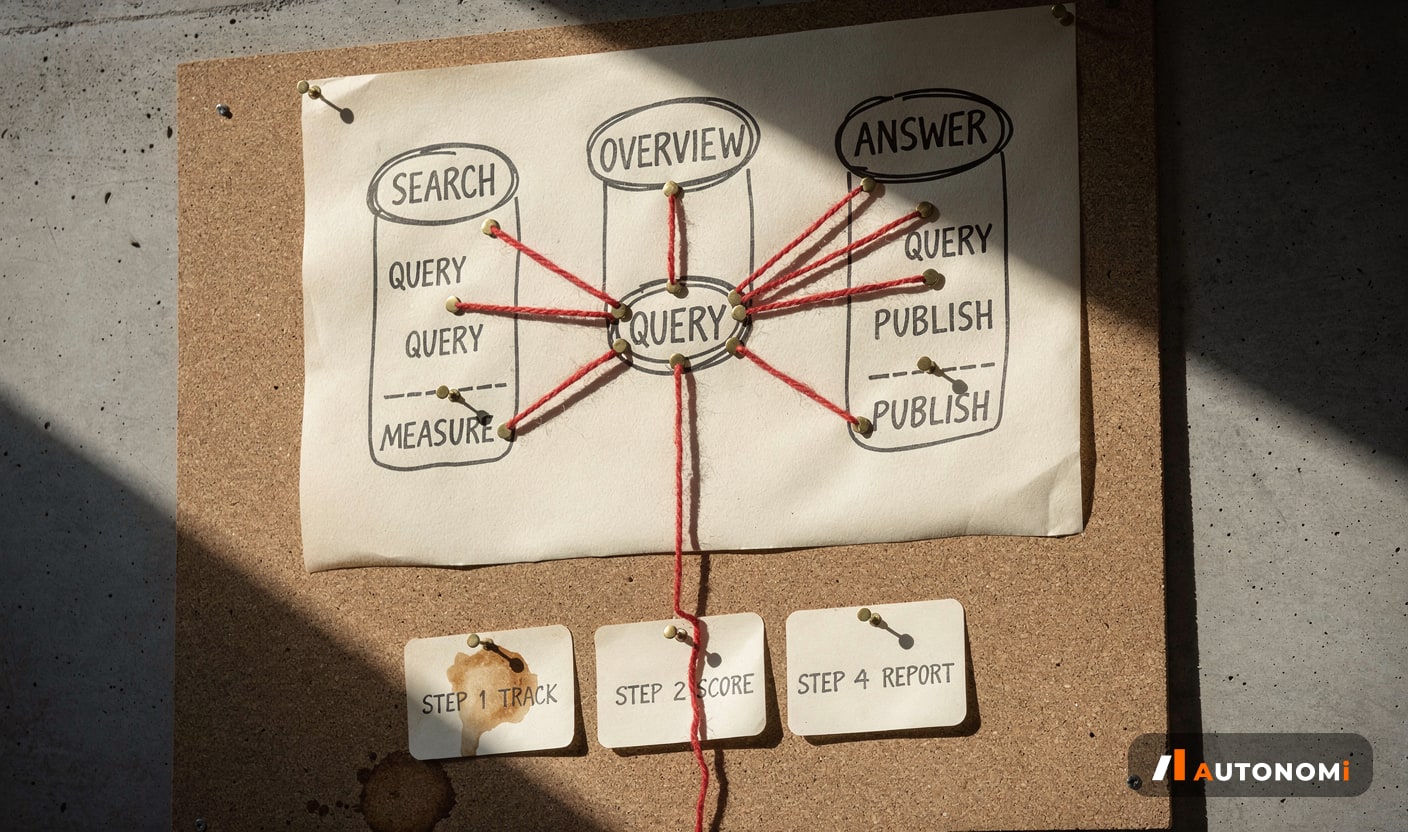
Start from demand, not from your model lineup. Write down what local shoppers ask before they buy: how two models compare, what a lease includes, which trim fits a family, how a trade-in works at your store. ECHO researches these topics for each dealership from Google Trends, Google Autocomplete and Reddit signals, and plans the store's content around them.
- Step 2ECHO Weeks 1–2
Answer each question on a page with a question-shaped heading
Give every question its own article or section, with the question as the heading and a direct two- or three-sentence answer right under it. AI assistants lift short, self-contained answers verbatim, so the first sentences should make sense on their own. ECHO writes these articles and publishes them to the dealership's own blog, so the answer lives under the store's name rather than a marketplace's.
- Step 3ECHO Ongoing
Publish on a steady schedule, not in bursts
Answer engines and search indexes reward sources that keep adding relevant pages. A dealership that publishes every week builds a body of answers that covers more questions over time; one that publishes a burst and stops goes stale. The ECHO plan covers 20 articles a month per rooftop, plus crossposts to the store's own social accounts that point readers back to each article.
- Step 4ECHO Every article
State dated, verifiable facts and keep them consistent
Write facts the way an assistant can quote them: dated ("as of October 2026"), specific, and the same everywhere your store appears — your website, your Google Business Profile, your blog. Every ECHO article ships with a claim graph: each factual statement is checked against a source before publish, an unverifiable claim is corrected or removed, and time-sensitive facts are re-verified and rewritten when a source changes. Offer figures never go into the article text; a live widget shows the current offer and in-stock units with their disclaimers, so no expired number lingers in an old post.
- Step 5ATLAS Weeks 2–4
Add structured data so machines can read the page
Structured data (schema.org JSON-LD) tells crawlers what a page is and what it claims. Every ECHO article carries its verified claims as schema.org ClaimReview data, and every live ATLAS landing page — ECHO's landing-page builder — carries schema.org data for the dealership and the page, a canonical address and a sitemap. This makes the store's pages easier to index and attribute; it is not a ranking promise.
- Step 6Your team Week 1, then weekly
Let AI crawlers in — and measure who cites you
An assistant cannot cite a page its crawler is blocked from. Ask your website provider to check robots.txt and any bot protection for OAI-SearchBot (ChatGPT search), PerplexityBot and Googlebot, which also feeds AI Overviews — this is your provider's setting, not something AUTONOMi edits on your website. Then measure: ECHO probes Perplexity and Google AI Overviews and records each time one of the store's articles is cited, split by engine.
What should you measure to know it's working?
AI citations, by engine
How often an AI answer engine cites one of the store's articles. ECHO records citations found in Perplexity and Google AI Overviews; read the trend over weeks, not a single day — answer engines change which sources they cite.
Questions covered
How many of the questions on your list have a published, direct answer. Coverage is the input you control; citations are the output you can only influence.
Publishing consistency
Articles published per week against the plan. A gap of several weeks is the most common reason a store's content goes stale for crawlers and readers alike.
Claims corrected before publish
How many statements the Claim Graph fixed or removed before an article shipped. A steady count is the check doing its job; a rising one tells you the topics are drifting toward facts that are hard to source.
Organic search impressions and clicks
Google Search Console shows whether the same pages are being found in classic search. AI answer engines and search indexes reward much the same content, so the two often move together.
Can anyone guarantee your dealership will appear in ChatGPT?
No. ChatGPT, Perplexity and Google AI Overviews are third-party products that decide on their own which sources to cite, and they change how they decide. Any vendor promising a guaranteed placement is promising something it doesn't control. What a dealership can control is whether it is a source worth citing: direct answers, dated facts, consistency, structured data and open access for crawlers.
How is this different from regular dealership SEO?
It is the same foundation with a different finish line. Classic SEO aims for a ranked link; AI answer engines quote a sentence and cite its source. That shifts the emphasis toward question-shaped headings, short self-contained answers and facts with dates and sources — the habits this playbook builds. The dealership SEO guide covers the definition; this playbook is the plan.
What mistakes keep dealerships out of AI answers?
Blocking AI crawlers by accident through a default robots.txt or an aggressive bot wall.
Writing payments and rebates into blog prose, where they expire and stay published long after the offer ends.
Publishing a burst of articles at launch and nothing for the next three months.
Different hours, addresses or policies on the website, the Google Business Profile and the blog.
Headings written as slogans instead of the questions shoppers actually type or ask.
Getting recommended by ChatGPT, answered
How do I get my dealership recommended by ChatGPT?
Make your store the easiest source to cite: answer the questions shoppers ask under question-shaped headings, publish on your own blog every week, keep facts dated and consistent, add structured data, and make sure AI crawlers can read your pages. No one can guarantee a mention, but these steps improve the odds.
Can AUTONOMi guarantee my dealership appears in ChatGPT or AI Overviews?
No, and no one honestly can — those are third-party products that choose their own sources. AUTONOMi's ECHO does the work that makes a store citable: researched, question-led articles on the store's own blog, every claim checked before publish, and citation tracking in Perplexity and Google AI Overviews.
What does ECHO do to make articles citable by AI?
Every ECHO article ships with a claim graph: each factual statement is checked against a source, unverifiable claims are corrected or removed before publish, verified claims are published as schema.org ClaimReview data, and time-sensitive facts are re-verified and rewritten when a source changes.
Do I need to change my website to get cited by AI?
Usually only one setting: AI crawlers must be allowed to read your pages, which is a robots.txt and bot-protection question for your website provider. ECHO publishes to the dealership's own blog and does not edit or rebuild your website.
How long does it take to show up in AI answers?
There is no fixed timeline. Pages have to be crawled and indexed before they can be cited, and answer engines change which sources they use. Treat it like SEO: a steady publishing habit measured over months, with citations tracked week by week.
What does ECHO cost?
ECHO is $1,799 per month per rooftop, covering 20 articles a month, Claim Graph verification, cover and inline imagery and social crossposting. It runs on its own or as a module on any AUTONOMi plan, and it is priced separately — not included in a plan.
Recommended reading
Make your store the source AI cites
Generate a free proposal to see the content plan ECHO would run for your rooftop — the questions it would answer and how every claim gets checked.