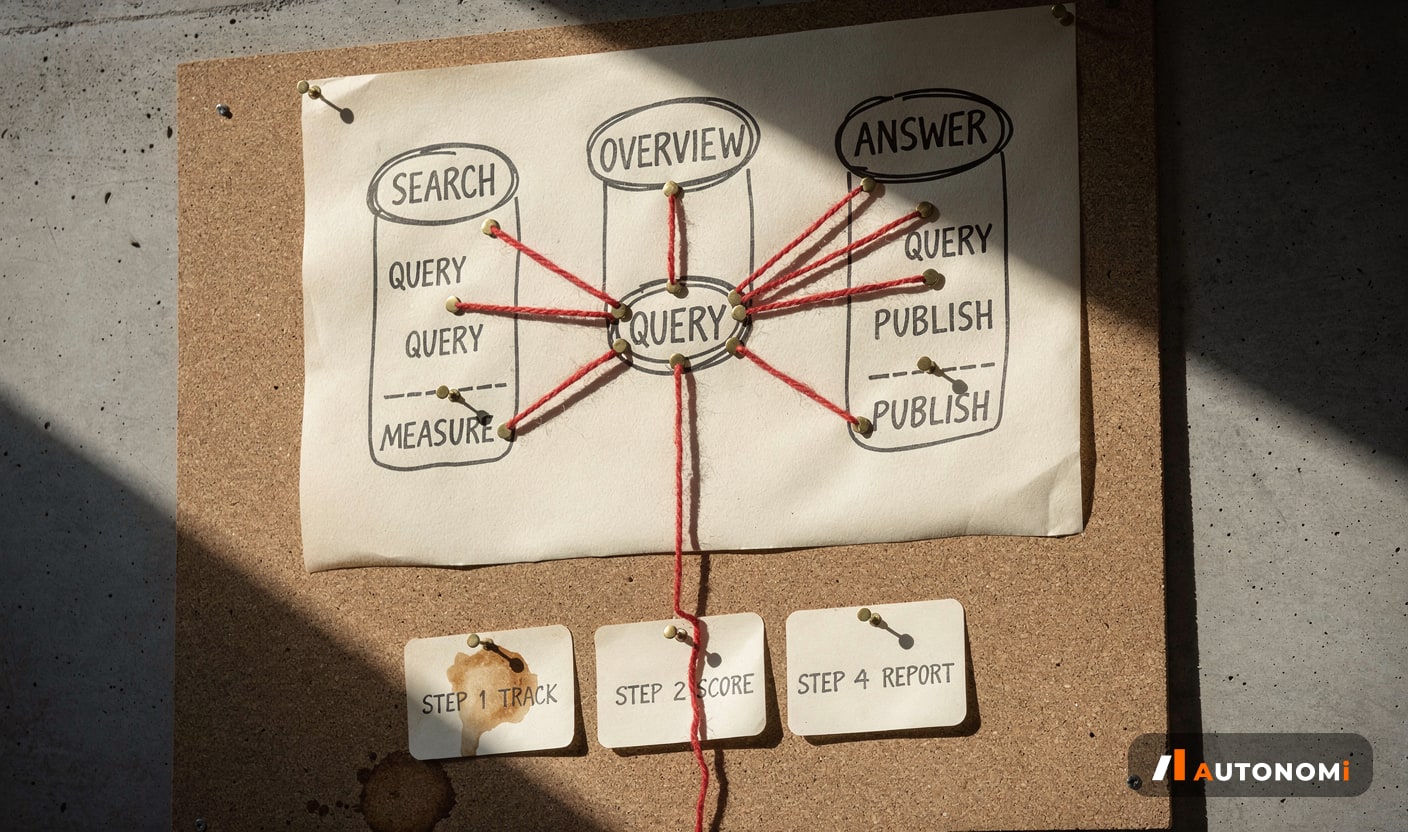
How to implement AI in a car dealership.
Implement AI in a dealership one lane at a time: pick one goal, connect the accounts the AI needs, start with paid advertising or lead follow-up, put approvals and an audit trail in place, then widen. With AUTONOMi, a 90-day rollout covers AEGIS for advertising, PRISM for follow-up, ECHO for content and AXIOM for governance — while pricing, appraisals and the close stay with the store's people.
Why do AI rollouts at dealerships stall?
Most stall for the same three reasons: no single goal, so nobody can tell whether it worked; too much switched on at once, so nobody trusts the output; and no governance, so a manager has to check every message by hand. A rollout that works starts narrow, names who approves what, keeps a written record of every decision the AI makes, and adds the next lane only when the first one is measured.
How do you implement AI in a dealership, step by step?
A 90-day sequence. The days are a planning guide, not a promise — the pace is set by how fast the store connects its accounts and approves the first plans.
- Step 1Your team Days 1–7
Pick one goal and get a baseline
Choose the outcome the first 90 days are judged on — more inbound leads, faster follow-up, or lower cost per lead — and write down today's numbers. AUTONOMi's free proposal produces a market brief from live data for the store's area, a useful baseline before anything is switched on.
- Step 2AEGIS Days 1–14
Connect the accounts and feeds the AI works from
The ad accounts, Google Analytics 4, Tag Manager and Merchant Center stay dealer-owned; AEGIS works through delegated OAuth access the dealer can revoke at any time. There is no inventory feed to build — AUTONOMi reads inventory by scraping the store's own website — and OEM offers are captured from the manufacturer's public offers pages, while the dealer tells AEGIS its own offers in plain words.
- Step 3AEGIS Days 15–30
Start with one lane: paid advertising or lead follow-up
Run the lane that serves the goal first. AEGIS can run paid campaigns on chosen channels while the store keeps others itself — any channel can be switched to Dealer-run, and AEGIS then touches nothing on it. Or start with PRISM, AUTONOMi's own dealership CRM, whose AI follow-up answers inbound leads; its text line goes live only after the dealership's consent language and carrier registration are in place.
- Step 4AXIOM Days 15–45
Put governance and approvals in place before you widen
AXIOM reviews ads against OEM brand guardrails and advertising rules before they publish, holds spend inside the approved monthly budget, and records every decision on a hash-chained audit trail the dealer can read. The store writes its own house rules in plain English — "never quote a monthly payment" — and AEGIS shows each plan, checked against the store's package, before it builds.
- Step 5ECHO Days 31–60
Widen to the next lane once the first one is measured
Add the lane the first one feeds: follow-up after advertising, or advertising after follow-up, then organic content through ECHO, which publishes the dealership's blog and social between campaigns. Each new lane runs under the same review and the same audit trail, so the team learns one control surface, not three.
- Step 6AEGIS Days 61–90
Review the 90 days and decide what stays human
Ask AEGIS for a report in plain words and it sends a PDF built from the ad platforms' own reported data, with findings and recommendations. Compare it against the baseline from day one, read the audit trail for decisions the team would have made differently, and turn those into house rules for the next quarter.
How do you measure whether AI is working in a dealership?
The goal metric against its day-one baseline
Leads, first-response time or cost per lead, whichever the rollout was judged on. One number, measured the same way before and after.
Hours of manual production removed
Campaign builds, content and first-touch follow-up the team no longer does by hand. It shows where staff time went back to customers.
Outputs held or corrected by review
How often AXIOM's review stopped or fixed an ad or a message before it shipped. A falling count means the house rules are teaching the system the store's standards.
Decisions the team overrode
Read from the audit trail. Frequent overrides on one kind of decision mark a place to add a house rule or keep the decision human.
What should a dealership not automate with AI?
Keep pricing, stocking and trade appraisals with people: AUTONOMi does not set vehicle prices or decide what to stock, and in PRISM the appraisal is the manager's number. Keep the close and the customer relationship with salespeople. Never automate cold outreach — PRISM's AI follow-up works inbound leads only, and texts go only to shoppers who consented. And the dealer stays the advertiser of record for its own offers.
What does the dealership team still own after AI is implemented?
The team owns the goal, the approved monthly budget, the house rules, the store's own offers and every conversation once a lead is handed over. As of 2026, AUTONOMi's systems take the repetitive production — building and optimizing campaigns, publishing content, the first answer to an inbound lead — and leave the judgment calls and the relationships with the people who run the store.
What are the common mistakes when implementing AI at a dealership?
Switching on every channel and every tool in the first week, with no baseline to compare against.
Letting AI send messages without written rules for what it must never say.
Treating the AI as a black box instead of reading its audit trail.
Automating cold texting or purchased lists — consent is not optional.
Expecting AI to replace salespeople rather than hand them warmer conversations.
Implementing AI in a dealership, answered
How long does it take to implement AI in a car dealership?
Plan on about 90 days to roll out the first lanes and measure them: connect accounts and start one lane in the first month, add governance and a second lane in the second, and review in the third. Paid campaigns can serve within the first weeks; organic content builds more slowly.
Where should a dealership start with AI?
Start with the lane closest to the goal. If the goal is more leads, start with AEGIS running inventory-anchored paid campaigns; if leads already arrive but wait too long, start with PRISM's AI follow-up on inbound leads.
Does the dealership keep control of its ad accounts?
Yes. Ad accounts, analytics, Tag Manager and Merchant Center stay dealer-owned, and AEGIS works through delegated OAuth access the dealer can revoke at any time. Any channel can also be switched to Dealer-run, and AEGIS then leaves it alone.
Does AI need access to the dealership's DMS?
Not for advertising: AEGIS reads inventory by scraping the store's own website. PRISM, AUTONOMi's own dealership CRM, pulls the store's DMS data in one way — it reads from the DMS and doesn't write back.
How does a dealership stop AI from saying the wrong thing?
Through governance written down in advance. AXIOM reviews ads against OEM brand guardrails and advertising rules before they publish, enforces the dealership's own plain-English house rules, and records each decision on a hash-chained audit trail the dealer can read.
What does it cost to implement AI with AUTONOMi?
AUTONOMi plans are a flat monthly fee from $999 to $2,999, depending on scope. ECHO and PRISM are separately priced modules per rooftop, and the free proposal itemizes the investment before anything starts.
Recommended reading
Plan your store's first 90 days
Generate a free proposal to get a market baseline for your area and see the first lane AUTONOMi would run for your store.