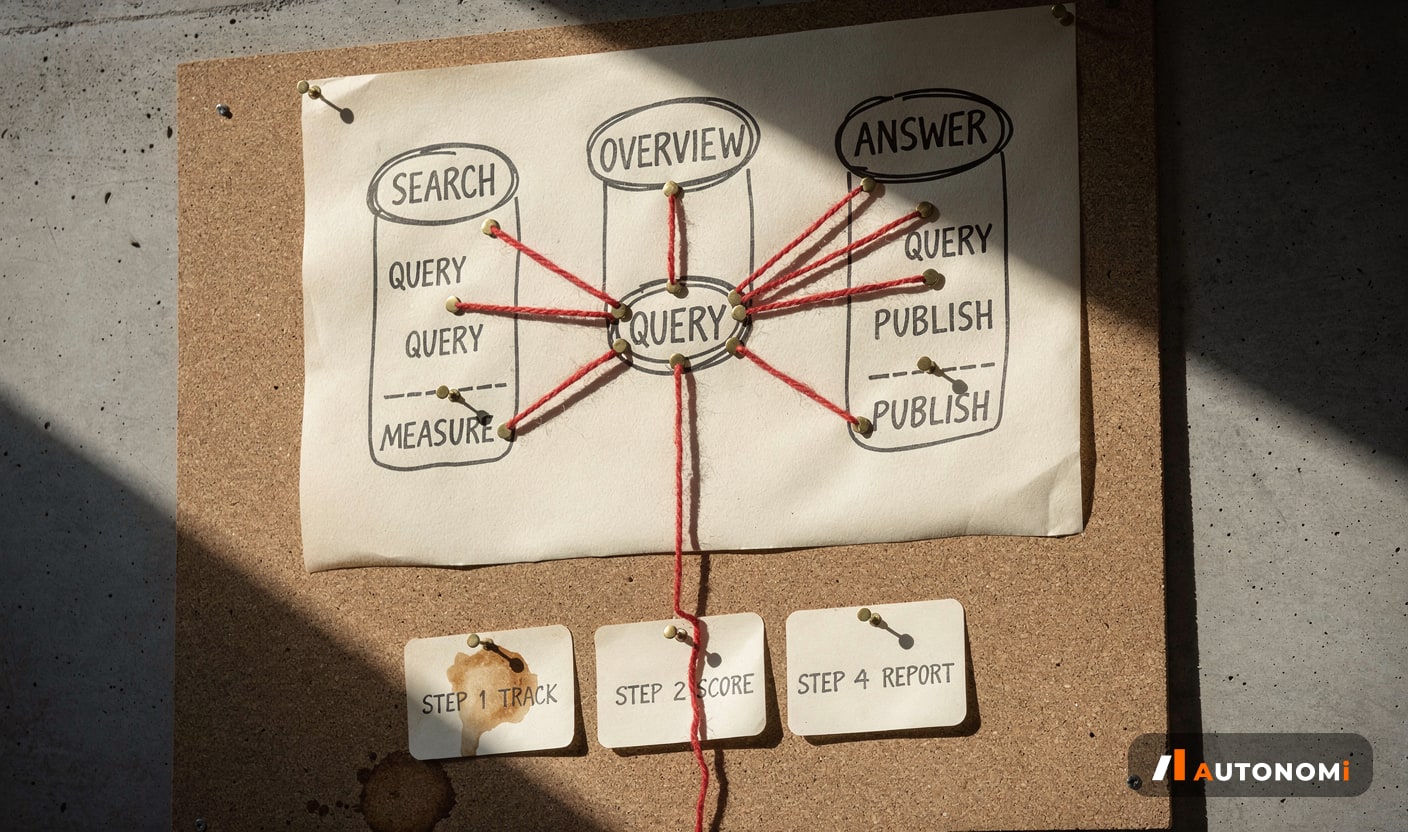
A service advisor's most valuable list is the one nobody works. It is the declined work from last month, written on a ticket or a clipboard, and it dies quietly when the customer drives out.
Lithia Motors is now describing AI in service as a source of "pre-sales," the offers made before and around the visit. The lesson is not that every store needs a robot on the phone. The lesson is that the service sale is decided by whether anyone asks, and by whether anyone asks again.
Most stores ask once, at the write-up, under time pressure. After that, the declined repair order has no owner.
What Did Lithia Actually Find About Service Pre-Sales?
WardsAuto reports that Lithia Motors is seeing benefits from AI in service pre-sales. The reporting turns on a human weakness that every service manager recognizes.
"It's really easy to forget to ask people, 'Do you want your windshield wipers done? Do you want me to check your tires?'", WardsAuto
That sentence describes a consistency problem, not a technology problem. An advisor with eight customers in the lane forgets the wipers. A system does not forget.
Now extend the logic. If forgetting the wipers costs a sale, forgetting a brake job the customer already heard about and postponed costs more. The customer was told. The customer said not today. The store has the exact line item, the exact date and the exact vehicle. What it usually lacks is a second ask.
Why Is the Declined Repair Order the Real Pre-Sale?
A pre-sale is an offer made before the customer commits. A declined line is the cleanest version of one. The need is documented, the price was quoted, and the only missing piece is timing.
Compare that with a generic reminder mailer. It tells every customer on the calendar that an oil change is due. It knows nothing about what that household was told last time and said no to.
The paper declined-work list loses on every dimension that matters. It lives at the desk. It depends on an advisor remembering to open it. It has no record of which channel the customer would welcome a message on, and no record of whether anyone ever followed up.
The mailer calendar loses differently. It is a schedule built around the store's convenience, sent to a mailing list, with no link back to the repair order that created the need.
Where Does Service Follow-Up Break Down in a Typical Store?
It breaks in three places, and none of them is a lack of effort.

First, the capture. A declined line is noted on the ticket, but the ticket is not a record anyone can report against. Ask the service manager how much declined work was written last week and the honest answer is a guess.
Second, the follow-up. Whoever owns it has a full lane to run. The call gets made on a slow Tuesday, or it does not.
Third, the consent. A store that texts every customer who ever gave a phone number is taking on risk it cannot defend. A store that never texts leaves the most responsive channel unused. The right answer is the channel the customer actually agreed to, and the store has to be able to show it.
The same measurement gap shows up in the sales department. We wrote about it in how CRM software is judged on one number nobody prints: if the process is not recorded at the time it happens, nobody can manage it. Service is the same, with a longer fuse.
What Does a Governed Declined-Work Follow-Up Look Like?
It starts with a repair order that exists as a record, with the declined lines attached to the customer, the vehicle and the date. Then a reminder interval, counted in days since the last visit, brings the household back into view. Then a message goes out only on a channel the customer consented to.
The interval matters. A day-count is honest about what the store actually knows. It knows when the customer was last in. It does not know the odometer, so a reminder promising "you are due at 35,000 miles" would be a guess dressed up as precision. Day-interval reminders are narrower and true.
The same discipline applies to the data connection. A follow-up system should read what the DMS holds and leave the DMS alone. Pull-only is a feature when the system of record for deals and accounting should not be touched by a marketing tool.
Finally, there is the number. If a store cannot say how many declined lines were written, how many were followed up and how many came back, it does not have a pre-sale process. It has a hope.
The AUTONOMi Approach to the Declined Repair Order
PRISM, AUTONOMi's own dealership CRM, includes a service module that keeps repair orders on the customer's record, service appointments, service reminders set by the store's interval, and declined-work follow-up. Every service message passes the same gates as a sales message and goes only on a channel the customer consented to.
Reminders run on days since the last visit; there is no mileage-based reminder, because PRISM has no live odometer feed. PRISM's DMS integration is pull-only: it reads the store's DMS data in and does not write back. Until a store's repair orders arrive that way, an advisor can write them on the screen.
PRISM Reports count repair orders, declined work and its follow-up from the record, so the morning meeting reads numbers rather than recollections. A service customer who then shops the store's website becomes a sales lead through the service-to-sales hand-off.
On the paid side, the Fixed Ops Revenue Engine module unlocks service-side search campaigns for topics such as oil change, brakes, tires, recall, battery and diagnostic. It is a growth module priced at $999 per month, separate from the base plan. Search brings in the customer who has not been in. PRISM works the customer who already told you what they need.
PRISM is not a DMS and does not claim to predict who will return or what a reminder will earn. It records, it follows up inside consent, and it counts. That is a narrower promise than a vendor's "AI service agent," and it is one a store can audit. The same standard applies to handoffs generally, as we argued in a delivery is not ready because it is on the calendar.
Who Loses When Declined Work Gets Chased?
The paper list loses first. A clipboard cannot report, cannot respect consent and cannot remember. The mailer calendar loses second, because a blast on a fixed schedule cannot compete with a message tied to a specific line item the customer already heard about.

The service advisor does not lose. The advisor who forgets the wipers is not a bad advisor, as the Lithia quote makes plain. The advisor with a record that asks the second question is a better one.
The competitor down the road wins if you leave it alone. A declined brake job does not go away. It goes to whichever shop sends the first message with a reason to act.
The same urgency drives sales follow-up when a shopper's need has a deadline, as in the total-loss shopper who cannot wait for a callback queue. Service customers run on the same clock, only quieter.
What Should a Service Director Do This Month?
Pull last month's declined lines and count them. If the number is an estimate, that is the finding.
Then decide who owns the second ask, on which channel, after how many days. Write it down. If the answer depends on one person's memory, it is not a process.
When you are ready to move the declined repair order from the clipboard to a record that follows consent, sign up and start with the service module.
Source: WardsAuto