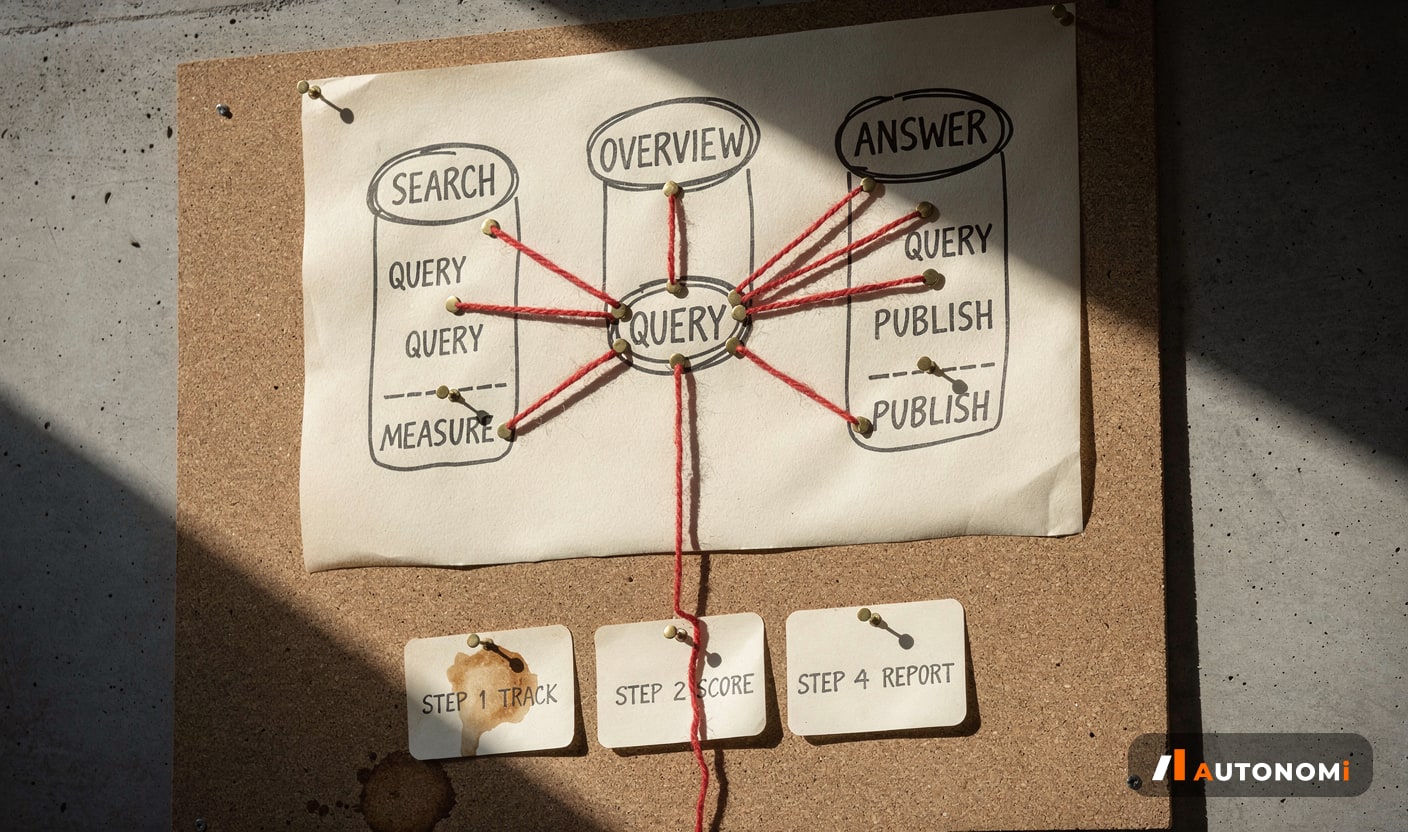
Every Monday, a sales manager reads a lead count out loud. Leads received, appointments set, units sold. Nobody in the room reads the one number that explains the other three: how long each lead waited before a person answered it.
Activity is easy to print. Waiting time is hard, because it needs two timestamps from two different places and an honest rule for what counts as a human response. This piece is about that number, and about how PRISM, AUTONOMi's own dealership CRM, counts it from the record instead of estimating it.
It is also a plain product argument, so here is the scope. PRISM is the subject. This is not a buyer's guide to anyone else's software.
What Is the One Number a Sales Floor Should See Every Morning?
It is the gap between a lead arriving and the first human response on the store's own line. Not the gap to an automated acknowledgement, not the gap to a task being created. The gap to a person.
A count of leads received tells a general manager how much demand showed up. It says nothing about what the store did with it. Two stores can post the same lead count and the same appointment count while one of them answered in minutes and the other answered the next afternoon. The averages hide the lead that waited.
Phone has the same blind spot. A call count that lumps answered, missed and returned together reports that the phone was busy. It does not report that the caller who got voicemail at 10:15 was never called back.
The morning meeting needs three plain figures: how many leads came in, how long each waited for a person, and what happened to every call. If a report cannot print those three, it is reporting effort, not service.
Why Does a Lead Count Hide the Wait?
A count is a total. A wait is a distribution, and the damage lives in its tail. One lead that sat overnight is lost inside an average that looks respectable.

The shopper does not experience an average. She experiences her own submission and the silence after it. If you want to understand how that silence reads from the customer's side, the argument in the 24/7 dealership is a reply schedule covers the late-night submitter who is mostly checking whether anyone follows up at all.
The same gap shows up inside the store. A lead that landed in a system as a name and a phone number has not been handed to anyone. The piece on why a lead is not handed off just because it reached the CRM makes the point: arriving is not the same as being owned.
So the measurement has to start at arrival and end at a person. Everything in between is the part worth reporting.
How Does PRISM Count a Lead's Wait From the Record?
PRISM Reports, the morning meeting view, show leads received and the first human response against the store's line, with every figure counted from the record and rates worked out as arithmetic on what happened.
That sentence carries a design choice. The number is derived from events the system itself recorded: a lead arriving, a person responding. It is not a survey, a sample, or a model's guess about how responsive the store probably is.
PRISM takes leads in by ADF with routing and a response clock, so the wait starts when the lead lands and the owner it was routed to is known. A clock that starts at arrival and stops at a person is the whole mechanism. There is no prediction layer on top of it.
PRISM does not forecast a close rate and does not benchmark the store against other stores; it reports the morning numbers from the store's own record. That restraint is deliberate. A predicted number invites an argument about the model. A counted number invites an argument about the floor, which is the argument worth having.
What Does PRISM Count When the Phone Rings?
The phone is where waiting time is most often invisible, because a missed call leaves no form, no timestamp a manager will ever see.

PRISM Phone runs voice on the store's own tracked line: an inbound call rings the lead's owner, then a pool the store picked, then the sales desk, and if nobody answers it goes to the store's voicemail. Each of those steps is an event in the record.
The same reports count calls answered, missed and returned. Returned is the word that matters. A missed call that was called back in ten minutes and a missed call that never was are different outcomes, and a report that stops at missed treats them as one.
When a call is missed, PRISM sends one text-back in the store's own words, read by AXIOM at publish, only where an informational reply to the customer's own call is lawful, never to a number that said STOP, and no more than once a day. It is an acknowledgement, not a marketing text, and it does not replace the callback.
AEGIS writes the call note from the transcript and flags any promise outside the Commitments sheet to a manager.✓ Oct 27 AEGIS never speaks to a dealership's customer on a store line; it whispers to the person and writes the note.✓ Oct 27 The human answers. The record shows whether one did.
Which Other Numbers Belong in the Same Meeting?
Waiting time is the opening figure, not the only one.
Waiting time is the opening figure, not the only one. PRISM Reports and the Morning Meeting count leads, phone, showroom, appointments, deals and service from the record, with no forecasts. On the showroom side, the desk log keeps ups, demo, write-up, manager turn and result.
Read together, they turn the Monday meeting from a recital into a diagnosis. If appointments set are healthy but shown is thin, the problem is confirmation, not demand. PRISM appointments carry a confirmation and two reminders, the day before and the hour before, sent only on a channel the customer consented to, and a missed appointment becomes the salesperson's task. Nothing is cancelled quietly; it is either shown, missed or rescheduled.
PRISM keeps one deal per opportunity, so a household can hold a sold deal and an open one at once, and a deal cannot be marked lost without a manager's reason.
That reason is the second half of the wait story. A lead that waited and then went elsewhere should say so in the lost column, in the manager's words, not disappear into a closed status.
That reason is the second half of the wait story. A lead that waited and then went elsewhere should say so in the lost column, in the manager's words, not disappear into a closed status.A sold deal feeds the learning loop's top rung. The point is that the outcome and the wait live on the same record, so the question "did the fast ones sell" is a lookup inside the store's own data, not a vendor's claim about stores in general.
Who Loses When Waiting Time Is Counted?
The loser is the report that shows activity and never waiting time. A dashboard of calls logged, emails sent and tasks created can look busy while a lead sits. Activity counts reward motion. Waiting time rewards arrival at a person.
The second loser is the morning meeting that runs on recollection. When the only evidence is what each salesperson remembers, the fastest talker wins the room. A counted number ends that. It is slightly uncomfortable the first week, because the record is indifferent to excuses.
There is also a handoff cost nobody prints. When a text program or a lead source sends consumers somewhere the dealership does not control, the store cannot answer for the clock. The case for owning that line is laid out in why the text number should be registered in the dealership's name: if the number belongs to someone else, so does the evidence.
And the routing question matters as much as the speed. The hand-off is the product, as that essay argues, and a response clock is the instrument that tells a general manager whether the hand-off held.
The AUTONOMi Approach: PRISM as the Record
PRISM is AUTONOMi's own dealership CRM: a store can replace its current CRM with PRISM and keep its DMS.✓ Oct 27 PRISM's DMS integration is pull only: it reads the store's customers, sales and service history in through a licensed data partner and does not write back to the DMS. It is not a DMS, and it does not claim to be one.
During a switch, PRISM can keep feeding the old CRM by ADF email. A store does not have to choose between a clean cutover and a working lead path.
PRISM Service keeps repair orders on the customer's record, with service reminders by the store's own interval and declined-work follow-up on the channel the customer chose. Repair orders are written by an advisor on the screen where the DMS data does not supply them, and reminders run by days since the last visit, not by mileage.
The dealership's text number is registered with US carriers under the dealership's own legal identity, filed and maintained by AUTONOMi as the dealer's agent. The line the customer texts is the store's, and so is the record of what happened on it.
PRISM carries a public price of $2,999 per month per rooftop. It is a growth module sold separately, on every plan, and it buys no media.
What PRISM does not claim is as important. It does not predict a close rate, forecast a month or rank the store against others. It reports the morning numbers from the store's own record, and the first of those numbers is how long a lead waited for a person.
What Should a General Manager Ask for on Monday?
Ask for the wait before the count. For every lead that arrived over the weekend, how long before a person on the store's line responded, and for every call that was missed, was it returned and when.
If the answer is a number, you have a floor you can manage. If the answer is a pause, you have found the real agenda item for the meeting.
The direction of travel is straightforward. As ad spend, lead forms and phone calls all land on one record, the store's first duty shifts from generating demand to being provably present when it arrives. A store that can sign up for PRISM and read its own response clock each morning stops arguing about whether the floor is responsive and starts fixing the specific leads that were not answered.