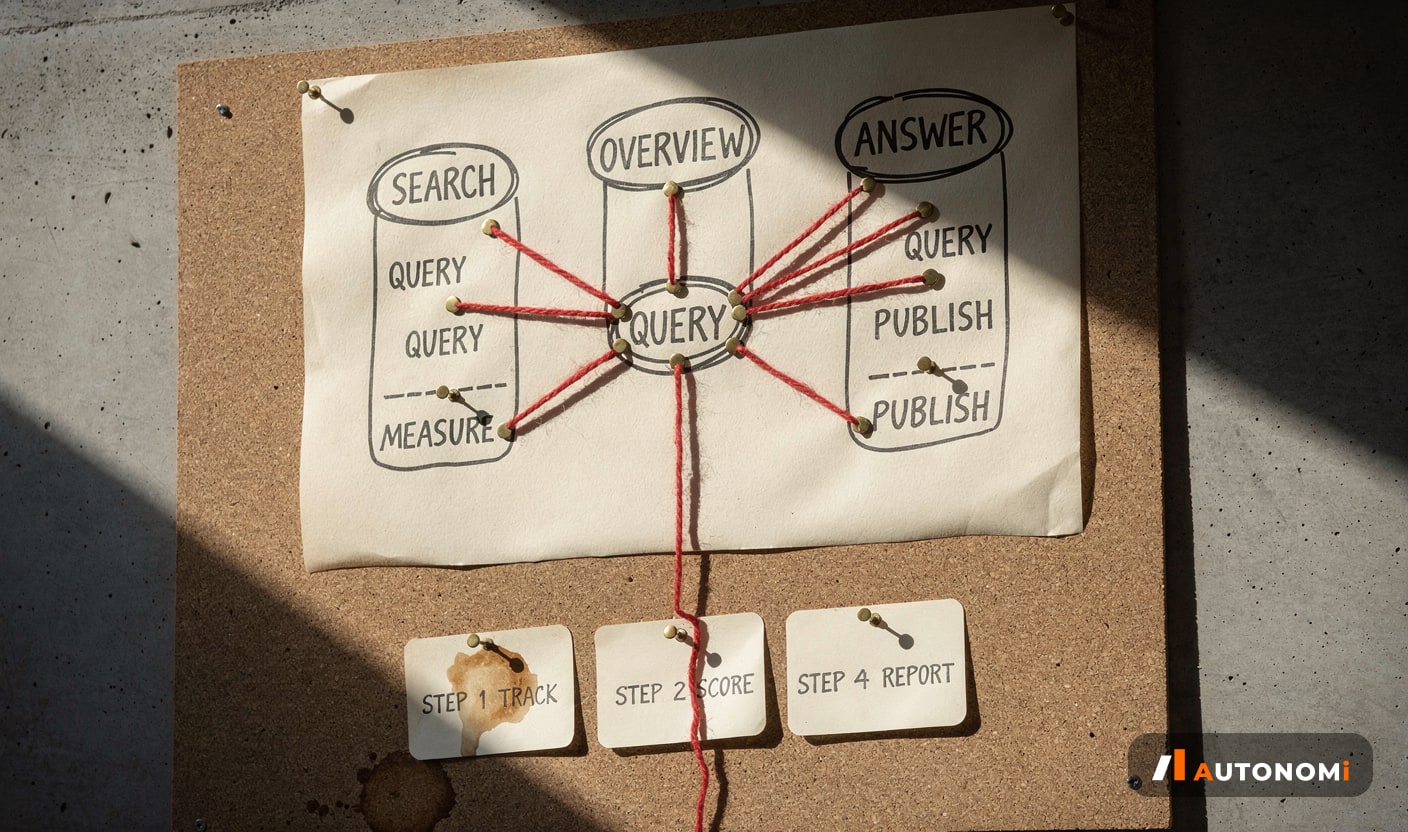
A shopper types "best Toyota dealer near me" into Perplexity at 9 PM on a Tuesday. Perplexity does not serve ads: it reads structured content, weights authoritative sources, and returns a cited answer. If your store's content earns the citation, that shopper lands on your VDP with a make, model, and condition already in mind. They fill out the form. Then they wait.
The trade press has spent 2026 correctly identifying AI search as an emerging acquisition channel. What it has not solved is what happens in the eleven hours between that form submission and the BDC opening its queue on Wednesday morning. The buyer who arrived through an AI answer engine, already pre-qualified by the recommendation, sits in the same lead pile as the person who clicked a display banner while reading sports scores. Your follow-up system treats them identically. That is the problem.
The dealership that wins the AI-search era is not necessarily the one that ranks in every AI answer engine. It is the one that responds before the buyer decides to move on.
Why Does the AI-Search Buyer Arrive at the Bottom of the Funnel?
Google AI Overviews and tools like Perplexity synthesize answers from structured, authoritative content rather than returning a ranked list of links for the user to evaluate. The implication for a dealership is significant. A shopper who reaches your VDP through a paid-search ad has expressed a keyword intent — "used Camry Houston" — and now needs to evaluate whether your price, your photos, and your reputation are worth a click to find out more. A shopper who reaches your VDP through a Perplexity recommendation has already heard a third-party source say your store is worth considering. The evaluation work happened before the visit, not during it.
This is not a minor distinction in funnel position. The buyer who was directed to you by an AI answer engine skipped the awareness and consideration phases that your paid channels are designed to serve. They are shopping, not browsing. When they fill out a form on that VDP, they are not researching their options; they are asking a question that they expect answered quickly.
The irony is that the sophistication of the acquisition channel makes the failure of the follow-up system more visible, not less. AI answer engines weight content authority: structured, verifiable, regularly updated pages earn citations; thin or stale content does not. A dealer who invests in the content quality required to earn those citations, then routes the resulting lead into a queue that a human works three business days later, has paid for the channel twice and converted it zero times.
If you want to understand how your content layer earns AI citations in the first place, the mechanics are covered in depth in an earlier piece on what AI answer engines actually read and why structure matters. This article is about what happens after the citation lands the buyer on your site.
What Does the Eleven-Hour Gap Actually Cost a Dealer?
The gap is not a new problem. Every dealer with a BDC has always had a closing-time exposure: leads that arrive after the floor shuts down sit until the morning, at which point whoever opens the queue tries to reconstruct a conversation with someone who submitted a form eight hours ago and has since visited two other stores.

What is new is who is arriving during that gap and how far along they are. A lead that arrived through a traditional paid channel in 2022 might have been ten days from a purchase decision. Research into AI search behavior indicates that users querying specific purchase-intent terms in AI answer engines are typically further along in a buying decision than users entering the same terms into a traditional search engine, because the AI query is constructed to get a recommendation, not a list of options to compare. That is a different buyer, with a shorter remaining decision window, sitting in the same eight-to-eleven-hour overnight queue.
The cost is not just a lost lead. It is a lost lead that your content strategy worked to deliver. You paid with structured content, with regular updates, with the effort required to earn a citation from a system that does not accept payment for placement. Then the follow-up system treated that lead the same way it treats a cold form submission from a banner click.
The dealers most exposed to this are the ones investing most aggressively in the AI-search content channel. Which is to say: the ones doing the right thing upstream are the ones most likely to have their work undone downstream.
Why Is the BDC Still the Only Answer to a 9 PM Form Submission?
The BDC model was built for a specific operational reality: trained humans, working defined hours, managing a queue of leads through a CRM. That model solved a real problem when the alternative was a salesperson managing their own follow-up on a yellow pad. It is not a model that was designed for round-the-clock lead volume from channels that have no concept of business hours.

AI search does not pause at 5 PM. Perplexity and Google AI Overviews serve answers continuously, with no scheduling or business-hours constraint. A shopper researching a vehicle at 10 PM on a Sunday gets the same quality of AI-assisted recommendation as one researching at 2 PM on a Thursday. When that recommendation sends them to your VDP and they submit a form, the channel has done everything right. The BDC has not started work yet.
The structural answer the industry has reached for is the chatbot: a widget on the VDP that can respond immediately. Chatbots solve the acknowledgment problem — they can confirm that a message was received. They do not solve the follow-up problem, which is not about acknowledgment but about sustained, sequenced engagement with a buyer across the hours and days between the initial form submission and a purchase decision. An acknowledgment widget and a follow-up system are different things, and most dealers have confused the two.
The follow-up gap is not a staffing problem that can be solved by hiring more BDC agents to cover overnight shifts. It is an architecture problem: the follow-up system needs to be capable of initiating and sustaining engagement outside human working hours, then handing a warm, contextualized conversation to a human when that human is actually available. That requires a different layer than the BDC, sitting between the form submission and the human conversation.
How Should a Dealership Think About AI Follow-Up vs. AI Acquisition?
The industry conversation in 2026 has conflated two distinct AI problems. The first is the acquisition problem: how do I get my store in front of buyers who are using AI tools to research and select dealerships? The second is the follow-up problem: once a buyer finds me and raises their hand, how do I respond at a speed and quality that matches the channel that sent them?
These require different answers from different parts of the operation. The acquisition problem is a content and structure problem, solved upstream at the website and blog level. AI answer engines prefer content that is structured, regularly verified, and anchored to specific facts rather than generic marketing language. A dealership that has not invested in that content layer will not earn citations regardless of how well its follow-up system works.
The follow-up problem is an operations problem, solved at the layer between the form and the human BDC. It requires a system that can fire a compliant, personalized outreach sequence on a lead as it comes in, sustain that sequence across the window between submission and human contact, and hand the conversation to a BDC agent when that agent is actually able to close it.
Treating these as the same problem produces the worst outcome: dealers who optimize for AI search visibility and then rely on a BDC that cannot respond until business hours. The channel generates more high-intent leads. The follow-up rate on those leads stays unchanged. The conversion math does not improve. You have simply moved the failure point downstream at a higher cost.
For a longer look at what AI follow-up with car leads actually means at the operational level, this earlier piece separates the search-engine answer from the one that moves the P&L.
What Does a Compliant AI Follow-Up System Look Like in Practice?
The compliance layer matters here because it is where most AI follow-up implementations collapse. TCPA requirements for SMS outreach are not optional, and they do not bend for high-intent leads. The Telephone Consumer Protection Act requires prior express written consent for automated text messages sent for marketing purposes, and violations carry statutory damages of $500 to $1,500 per text. A follow-up system that fires SMS sequences without a compliant consent architecture is not a competitive advantage; it is a liability.
A compliant system needs, at minimum: a clear consent record at the point of form submission, STOP and HELP keyword handling, persisted unsubscribe state across the follow-up sequence, and quiet-hours enforcement that reflects state law rather than just federal TCPA floors. States like Texas, Florida, Oklahoma, and Washington have stricter quiet-hours windows than the federal standard, and a follow-up system that fires at 7:45 AM in Florida on a Saturday is out of compliance even if it would be legal at that time under federal rules.
Beyond compliance, a usable follow-up system for the AI-search era has to handle what the buyer already knows. A shopper directed by an AI recommendation to a specific VDP has a vehicle in mind. The follow-up sequence that opens with "Hi, I see you were interested in our inventory" is a downgrade from the specificity of the channel that delivered them. The sequence needs to reflect what the buyer told the form: which vehicle, which condition, what they asked. Anything less reads as a form letter, and a buyer who arrived through an AI channel that gave them a tailored recommendation notices the contrast immediately.
How AUTONOMi Solves This
LANE, AUTONOMi's AI sales-conversation layer, operates a TCPA and CTIA-compliant SMS infrastructure with STOP and HELP keyword handling and persisted unsubscribe state across every sequence. The compliance rails are not a wrapper added to an existing chatbot; they are the foundation the system was built on, including state-law-aware quiet hours for Texas, Florida, Oklahoma, and Washington, with the federal TCPA window enforced everywhere else.
LANE runs a daily follow-up sweep that processes inbound lead enrollments and fires email and SMS sequences to those leads. When a buyer fills out a form at 9 PM and the BDC does not open until 8 AM, LANE is the layer that processes that enrollment and initiates outreach before the buyer has spent the night deciding whether to call a different store. The human BDC does not have to be the first contact; it has to be the right contact when a buyer is ready to commit.
LANE hands off to the BDC when buyer intent crosses a threshold, so the human conversation begins at the point where a human can actually advance it toward a sale. This is the architecture the gap requires: not a chatbot that replaces the BDC, and not a BDC that has to cold-start every lead regardless of what happened overnight, but a layer between the two that keeps the buyer engaged and delivers a warmer hand-off.
Every Sunday, LANE regenerates the per-dealer playbook from the last 30 days of sessions, updating the winning patterns, objections, and follow-up posture that shaped outcomes during that window. The system learns from the actual conversation data at that rooftop rather than running a static script across every dealer on the platform. A store that sells primarily pre-owned imports gets a different follow-up posture than one selling new domestic trucks.
On the content side, LANE's article context feature means the follow-up system is aware of what the buyer was reading before they submitted the form, when the dealer also has an active blog. When a LANE chat widget is attached to a dealer blog article, it activates article context and blog-search so the conversation reflects what the buyer was reading, not just what they typed in a generic inquiry form. For a dealer investing in the structured content that earns AI citations, that integration means the follow-up layer and the content layer speak to each other. The buyer does not have to reintroduce themselves.
The acquisition channel has changed. The response architecture has to match it. The dealers who earn AI citations but rely on a BDC-only follow-up model are doing the hardest part of the work and capturing the least of the return. Sign up to see how LANE closes the gap between the lead the AI channel sent and the conversation that closes the deal.
The Buyer the AI Sent Is Not Going to Wait
The direction of travel here is clear. AI answer engine usage is growing across every demographic that represents a car-buying household, and the query patterns showing up in AI search increasingly reflect specific purchase intent rather than general research. The share of car-buyer first touchpoints that run through an AI recommendation rather than a traditional search click is going up. It is not going back down.
What this means for the dealer is not complicated: the bar on both sides of the acquisition equation has risen simultaneously. The content that earns AI citations has to be more structured, more specific, and more regularly maintained than the content that earned organic search rankings. And the follow-up system that handles the leads those citations generate has to be faster, more compliant, and more contextually aware than the BDC model that handled leads from a banner click.
Most dealers are investing in one side of that equation and ignoring the other. The stores that figure out both, and wire them together so the follow-up system knows what the content layer delivered, are the ones that will convert the AI-search era into a durable revenue advantage rather than a marketing story with no closing numbers attached to it.
The buyer the AI sent is not going to wait until your BDC queue opens. The only question is whether you have a system ready when they arrive. For more on how the content layer that earns AI citations works alongside dealer-side infrastructure, this piece on what AI answer engines actually read from dealer sites is the logical companion.