Why Does a New Brand Launch Hand the Organic Queries to Everyone Except the Dealer?
The OEM fires its campaign on a Tuesday. Television spots, YouTube pre-rolls, a national paid search budget that buys the brand name everywhere. By Thursday, there are people in your market typing that brand name into Google for the first time. They are not typing it because they are ready to buy. They are typing it because the awareness campaign did exactly what it was supposed to do. The problem is that none of those queries land on your store.
They land on review aggregators. On the OEM's own landing page. On automotive news sites that filed a story the week the brand was announced. On YouTube channels that covered the launch for content. Every organic position in the SERP for that brand name, in your city, belongs to someone who was publishing before you knew the franchise was yours to sell.
This is the sequence every new-brand dealer walks into, and it is not bad luck. It is a structural gap between how OEM awareness campaigns work and how organic search authority is built. The two processes operate on incompatible timelines. Paid campaigns can launch in a day. Search authority takes weeks to months of consistent, geo-anchored, topically coherent publishing. When a dealership takes on a brand most local buyers have never searched for, its organic search surface for that brand is effectively zero at launch. The OEM's paid campaign creates demand the dealer's website cannot capture.
How Does an OEM Awareness Campaign Create Search Demand the Dealer Cannot Capture?
Greenhous Group announced on 21 September 2026 that it will represent LEPAS, Chery Automobile's UK sub-brand, which launched in August 2026 and is targeting a network of around 90 UK dealers by 2027. Every dealer joining that network inherits a brand with near-zero local organic search history in the UK. The OEM's awareness spend will create a wave of branded queries. The question is who captures them.

Paid search can capture some of it, immediately. The dealer buys the brand keyword, the model keywords, the "LEPAS near me" queries. That works until the budget runs out for the day, or until the shopper is not ready to convert and clicks away without leaving a signal. Paid capture is a sieve. The queries the dealer does not have budget to cover, the queries that fire at 11pm, the queries from people who scroll past the ads on principle: those go somewhere else. Where they go is determined by who has organic authority for the brand in that geography.
AI answer engines, including Perplexity, Google AI Overviews, and ChatGPT Search, preferentially cite sources that have established topical authority and structured, verifiable claims. A dealer who published nothing about the brand before launch will not appear in those answers. A dealer who published ten geo-anchored articles, model comparison pieces, and FAQ posts in the weeks before launch has a real chance of being cited when a local shopper asks an AI engine to explain what the brand is. That is not a future scenario. It is the mechanism, running right now, on every new brand that enters a market.
The OEM's awareness campaign is not your enemy. It is the trigger for demand you should have prepared to capture. The preparation has to happen first.
Why Is Calendar-Based Content Too Slow to Close the Gap?
The standard content shop operates on a calendar. A coordinator is assigned four articles per month. Topics are decided in a planning meeting, written over two weeks, reviewed, and scheduled. The articles cover what the marketing team feels like writing about: service specials, model year arrivals, community events. There is no keyword research driving the topics. There is no geo-anchoring logic. There is no mechanism to detect that a new brand is entering the market and that the keyword landscape for that brand is, right now, unfilled.
Even a well-run calendar-based operation cannot close a brand-launch content gap in time. Search engines typically require weeks to index, crawl, and begin ranking new content, and organic authority compounds over time rather than arriving in a single publication event.✓ Sep 21 A dealer who starts publishing the week the OEM campaign fires is already behind. The review aggregators and automotive press started publishing months earlier, when the brand was announced. By the time a calendar-based shop has produced four articles about the new brand, the SERP positions are settled.
The other problem is specificity. Calendar content is rarely geo-anchored in any meaningful way. An article titled "Introducing the LEPAS EV1" does nothing for a buyer in Wolverhampton searching "LEPAS dealer Wolverhampton" or "LEPAS EV1 UK price." The keyword research that would surface those queries, and the content strategy that would address them systematically, is not something a coordinator scheduling four articles a month can produce at the pace the launch demands.
Calendar-based content shops are optimized for steady-state publishing. They are structurally unprepared for the non-linear demand that a brand launch creates. The content gap opens the moment the OEM announces the franchise is available, and it stays open until someone closes it with volume, velocity, and topic precision. Calendar publishing cannot supply any of those three things at the required pace.
What Does It Actually Mean to Build Search Authority Before the Showroom Opens?
Search authority for a new brand in a specific geography is not one article about the brand. It is a coherent body of content that signals to search engines and AI answer engines that this domain is the authoritative local source for questions about this brand. That signal comes from topical coverage across multiple dimensions: model-level pages, comparison content, FAQ content, geo-specific content, and content that addresses the specific questions buyers are already asking in searches and forums.
Google Autocomplete and Google Trends surface the actual queries buyers are forming in real time, including query patterns that emerge as a new brand enters a market. Those signals exist before the franchise agreement is signed. The keyword landscape for a brand like LEPAS, including comparisons to established EV competitors, range and charging questions, UK dealer location queries, and pricing questions, is forming in search data right now. A content engine that reads those signals can identify the topics that need to be covered, in order of demand, before a single unit arrives on the lot.
Geo-anchoring matters because organic search is local. A piece about the LEPAS model lineup in general terms competes with the OEM's own pages and every piece of automotive press. A piece about LEPAS availability in a specific city or region, with the correct local signals baked into the structure, competes in a much smaller pool. The dealer's advantage over the OEM and the press is that the dealer is local. That advantage is only captured if the content is written to claim it.
The window to build this authority is not indefinitely open. In markets where multiple local dealers eventually compete for the same branded queries, the stores that publish early and consistently tend to hold higher organic positions because they have accumulated more indexed content, more inbound signals, and more topical depth. The dealer who waits until the cars are on the lot is not competing with an empty SERP. They are competing with the store across town that started publishing eight weeks earlier.
Who Loses When the Dealer Has No Content Moat at Launch?
The obvious losers are the queries that go to review sites and aggregators instead of the dealer's VDP. That is traffic the dealer paid nothing to generate, because the OEM's campaign generated it. But that framing understates the real cost.
The subtler loss is in AI citation. When a buyer asks an AI answer engine a question like "which dealers near me carry LEPAS vehicles," the engine's answer is drawn from indexed, structured content that has established local relevance. A dealer with no published content about the brand is invisible to that answer. The buyer gets pointed to a competitor who published a "LEPAS now available at [store name]" article three weeks ago, or to an aggregator listing that shows the dealer's address without any of the context that would have built trust before the visit.
The review sites are not losing anything here. They published the brand coverage the day it was newsworthy. They will rank for the informational queries indefinitely because they have domain authority that took years to build and they publish at volume. The OEM's own landing page will capture the buyers who are ready to configure a vehicle online. What is left for the dealer's organic surface is the local intent: the "near me" queries, the financing questions, the comparison queries from buyers who have moved past research and are choosing a dealer. Those are the highest-value queries in the funnel. They are also exactly the queries a dealer with no geo-anchored content cannot win.
As we have covered before in the context of brand adoption, the content problem arrives before the first unit does. The gap is not a marketing failure you can fix after launch. It is a structural condition of how organic authority works that requires a structural response, built before the OEM fires its first impression.
How AUTONOMi's ECHO Engine Solves the Pre-Launch Content Gap
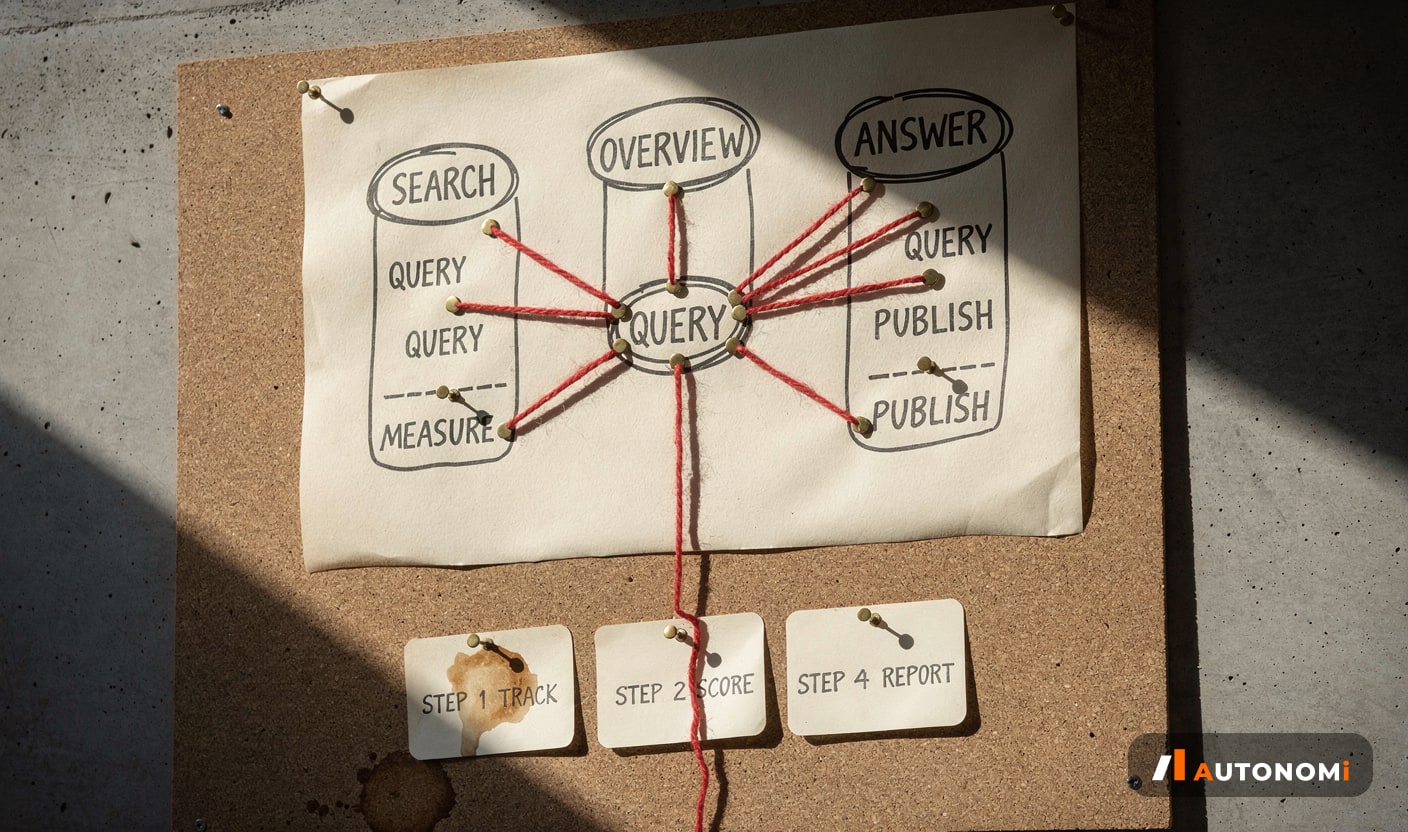
ECHO, AUTONOMi's organic content engine, researches the keyword landscape for a new brand using Google Trends and Google Autocomplete signals, identifying the actual queries buyers are forming before a single article is published.✓ Sep 21 That research is not a one-time audit. It runs continuously, surfacing topic angles by demand volume so the content that gets published first is the content that captures the most queries.
ECHO generates geo-anchored, SEO-optimized blog posts targeted to the dealer's specific market, building local search authority for the exact queries the OEM's awareness campaign will generate. A dealer joining the LEPAS network in Wolverhampton gets content that targets Wolverhampton buyers: local keywords, local dealer identity baked into the structure, and the kind of geographic specificity that review aggregators cannot produce at the rooftop level.
The publication timing is deliberate. ECHO plans a per-dealer content strategy based on keyword research, then generates and publishes SEO-optimized articles on a cadence the dealer controls, independent of when inventory arrives.✓ Sep 21 The goal is not to race the OEM campaign. It is to be indexed and ranked before the campaign creates the queries. That requires a content engine that can move on the keyword signal, not on the content calendar.
Every article ECHO produces ships with a machine-extractable claim graph: structured, verifiable assertions anchored to source citations with timestamps, rendered as schema.org ClaimReview JSON-LD alongside the article. This is the architecture AI answer engines extract from when they build their cited answers. A dealer whose content carries this structure is not just ranked in traditional search. They are positioned to be cited by Perplexity, Google AI Overviews, and ChatGPT Search when a local buyer asks about the brand. As the question of AI citation is really a data-quality question, not a publishing-volume question, and ECHO's claim graph is built to answer it at the structural level.
This is the architecture AI answer engines extract from when they build their cited answers. A dealer whose content carries this structure is not just ranked in traditional search. They are positioned to be cited by Perplexity, Google AI Overviews, and ChatGPT Search when a local buyer asks about the brand. As the question of AI citation is really a data-quality question, not a publishing-volume question, and ECHO's claim graph is built to answer it at the structural level.ECHO surfaces live inventory and current offers on dealer blog articles through a dynamic widget: the article names the models it covers, and the widget renders the current in-stock units and offer for exactly those models, availability-gated so it never shows a car the dealer does not have. When the first LEPAS units arrive, the articles that have been building authority for weeks automatically surface the live inventory for buyers who are ready to act. The content that built the organic moat becomes the bottom-of-funnel surface at the moment it matters most.
ECHO runs a self-critique quality gate on every draft before publish, and every article passes through an AXIOM advisory review against brand guardrails and regulatory standards before it goes live. The volume and velocity the pre-launch window requires does not come at the cost of quality or compliance. And as the real unlock of AI content agents is not volume for its own sake but autonomous execution against a real keyword strategy, at the pace a brand launch demands and without a coordinator as the bottleneck.
The Stores That Publish Before the Campaign Fires Own the Queries That Follow
The LEPAS situation will not be unique. As automotive markets continue to fragment, with new entrants from Chinese, European, and startup OEMs targeting franchise dealer networks across the UK, US, and EU, the pattern of OEM-funded awareness preceding any local organic search authority will repeat for every dealer group that takes on a new franchise. The question is not whether the content gap will exist. It will. The question is whether the dealer group that signs the franchise agreement is also signing up for a content engine capable of closing it before the OEM campaign fires.

Calendar-based content shops will not close it. In-house teams working at human speed will not close it. The review sites and automotive press have a head start that compounds every week a dealer publishes nothing. The only structural response to a structural problem is an inventory-native content engine that reads the keyword landscape the brand creates, builds geo-anchored authority from the moment the franchise is confirmed, and publishes at the pace the launch demands rather than the pace a content calendar allows.
The dealer groups that understand this will own the local organic queries for every new brand they take on. The ones that wait for inventory before they think about content will spend years paying for traffic they could have captured for free. If your group has a new franchise in the pipeline, the time to build the content surface with AUTONOMi is before the OEM's first impression, not after it.